No products in the cart.
China is one of the world’s most important manufacturing and export centers for civilian drones, commercial UAVs, industrial drone platforms, drone components, camera payloads, agricultural drones, mapping drones, and drone-related systems. Because Chinese drones are widely used in agriculture, surveying, public safety, infrastructure inspection, logistics, security, filmmaking, and industrial operations, many overseas buyers ask a practical and important question: does China control the export of drones?
The short answer is yes. China does control the export of certain drones, UAV systems, drone-related components, payloads, anti-drone systems, and dual-use technologies. However, this does not mean that every drone made in China is banned from export. China’s drone export control system is more nuanced. Many ordinary consumer and commercial drones may still be exported through normal customs and trade procedures, but certain drones and related equipment may require export licenses, end-user review, end-use documentation, or additional compliance checks.
China’s drone export controls are connected to several policy goals: protecting national security, fulfilling international non-proliferation responsibilities, preventing the misuse of dual-use technologies, regulating sensitive UAV equipment, and balancing the growth of China’s drone industry with international security concerns. The system is mainly administered through China’s export control framework, including the Export Control Law of the People’s Republic of China, dual-use item export control rules, Ministry of Commerce announcements, customs procedures, and specific control lists.
For importers, distributors, drone dealers, manufacturers, public safety agencies, agricultural companies, engineering firms, and logistics companies that source drones from China, understanding these rules is essential. A product may appear to be a normal commercial drone, but if it has certain technical capabilities, specialized payloads, extended flight performance, advanced communication equipment, military end-use risks, or controlled dual-use components, it may fall within China’s export control system.
Compliance note: This article is for general informational purposes only and does not constitute legal advice. China’s export control rules can change, and product classification depends on exact technical specifications, end use, end user, destination country, and transaction structure. Exporters and buyers should verify requirements with the latest official Chinese regulations, customs guidance, and professional trade compliance advisers.
Current State of China Drone Exports
China remains a major global supplier of drones and UAV-related products. Chinese companies manufacture a wide range of drone products, including consumer quadcopters, professional camera drones, agricultural spraying drones, mapping drones, inspection drones, logistics drones, industrial UAV platforms, flight controllers, motors, batteries, gimbals, sensors, remote controllers, communication modules, and drone frames.
The global demand for Chinese drones is driven by several factors. First, China has a mature electronics manufacturing ecosystem that supports fast production, competitive pricing, and large-scale supply. Second, Chinese drone companies have developed strong integration capabilities in flight control, imaging, stabilization, battery systems, obstacle avoidance, GNSS positioning, and automated flight planning. Third, many international users view Chinese drones as practical tools for commercial operations because they are available in different sizes, price levels, payload configurations, and application categories.
Chinese drone exports serve many industries. Farmers use agricultural drones for crop spraying and seeding. Surveyors use mapping drones for photogrammetry, LiDAR mapping, and topographic surveys. Energy companies use inspection drones for power lines, wind turbines, solar farms, and pipelines. Public safety agencies use drones for search and rescue, firefighting support, and emergency response. Media companies use camera drones for aerial photography and video production. Industrial operators use drones for facility monitoring, construction progress tracking, and asset inspection.
At the same time, the international drone trade has become more sensitive. Drones can be used for peaceful civilian purposes, but some UAV technologies may also have military, surveillance, intelligence, or security applications. Because of this dual-use nature, China has gradually strengthened and adjusted export controls on certain drones and drone-related items. Export controls do not eliminate China’s drone exports, but they require exporters to pay closer attention to technical classification, destination risk, end-user identity, and intended use.
Why China Drone Exports Matter Globally
China drone exports matter because drones are no longer niche technology. They are now part of agriculture, construction, logistics, public safety, border management, infrastructure maintenance, environmental protection, disaster response, and commercial data collection. When a country or company imports drones from China, it may be buying not only an aircraft but also a complete technology package that includes cameras, software, navigation systems, batteries, sensors, data links, and support equipment.
The importance of Chinese drone exports can be understood in three dimensions. The first is economic. Drones create value for manufacturers, component suppliers, software providers, distributors, service providers, pilots, and end users. The second is technological. Drones combine robotics, artificial intelligence, sensors, wireless communication, positioning systems, cloud platforms, and automation. The third is security-related. Some drone capabilities, such as long range, autonomous navigation, encrypted communication, heavy payload capacity, night vision, thermal imaging, or swarm operation, can raise export control concerns.
For this reason, China’s drone export policies are closely watched by global buyers. If China tightens controls on a specific drone category, overseas distributors may face delays, documentation requests, or licensing requirements. If China adjusts controls to clarify or narrow the scope, certain commercial drone exports may become easier. Buyers that depend on Chinese drone supply chains should therefore treat export control compliance as a normal part of procurement planning.
Does China Control the Export of Drones?
Yes, China controls the export of certain drones, UAVs, drone-related equipment, and dual-use technologies. China’s controls apply mainly to drones and components that meet specific technical thresholds, have sensitive performance characteristics, can be used for military or security purposes, or are connected to prohibited end uses such as weapons proliferation, terrorism, or military misuse.
China does not treat every drone export in the same way. A small consumer drone used for photography may not be regulated in the same way as a long-endurance UAV, a drone with advanced payload capacity, a specialized industrial drone carrying controlled sensors, a drone designed for beyond-visual-line-of-sight operation, or a system connected to military end users. The key issue is whether the product falls within a controlled category under Chinese export control rules and whether the destination, end user, or end use creates compliance risk.
China’s export control framework has evolved over time. Chinese authorities have issued drone-related export control measures and later adjusted them as technology, market conditions, and security concerns changed. In 2023, China announced export controls on certain drones and drone-related equipment, including selected UAV systems and equipment such as certain engines, lasers, communication equipment, and anti-drone systems. In 2024, China adjusted UAV export control measures, showing that the system is not static but subject to policy updates and technical refinement.
The practical meaning is simple: China allows many drone exports, but exporters must screen products and transactions. If a drone or related item is controlled, the exporter may need to apply for an export license before shipping. If the exporter knows or should know that the product may be used for prohibited purposes, the exporter may face restrictions even if the item is not obviously listed as controlled.
What Are China’s Export Controls on Drones?
China’s export controls on drones are rules that restrict or license the export of certain UAV products, drone components, drone payloads, anti-drone systems, and related technologies. These controls are generally designed to prevent sensitive dual-use items from being exported without government review.
China’s drone export controls may cover several categories. The first category is complete unmanned aerial vehicles that meet certain performance standards or technical specifications. The second category is drone-related equipment, such as special engines, flight control systems, communication devices, data links, laser equipment, infrared or hyperspectral imaging systems, and payload modules. The third category is counter-UAV or anti-drone equipment, including systems that detect, interfere with, disable, or intercept drones. The fourth category is related technology, software, design information, production know-how, and technical assistance connected to controlled items.
In export control practice, a drone may be evaluated based on technical factors such as maximum takeoff weight, endurance, flight range, payload capacity, navigation system, control distance, beyond-visual-line-of-sight capability, autonomous flight capability, sensor type, communication system, and whether it can carry or integrate sensitive payloads. The exact classification depends on the wording of the applicable Chinese control list or announcement.
China’s export controls are not only product-based. They can also be transaction-based. Even where a product is normally commercial, exporters may need to consider who the buyer is, where the product will go, how it will be used, and whether the transaction involves sanctioned, restricted, military, terrorist, or weapons-related end users. This end-use and end-user review is a central part of modern export control compliance.
How Does China Regulate Drone Exports?
China regulates drone exports through a combination of export control laws, dual-use item regulations, administrative announcements, control lists, customs supervision, license requirements, and end-use and end-user management. The main authorities involved may include the Ministry of Commerce, the General Administration of Customs, and other relevant government departments depending on the item type and control category.
The regulatory process usually begins with product classification. The exporter must determine whether the drone, component, payload, software, or technology is listed or otherwise controlled. This requires a review of technical specifications and the applicable export control catalogue or list. If the item is controlled, the exporter normally needs to apply for a license before export.
The licensing process may require documents such as product descriptions, technical parameters, contracts, buyer information, end-user certificates, end-use statements, destination information, and other supporting materials. Authorities may review whether the export affects national security, international obligations, non-proliferation commitments, regional stability, or other policy concerns.
Customs also plays an important role. Even if a supplier accepts an order, the shipment may still be checked at customs. Customs declarations, HS codes, product descriptions, licenses, and supporting documents must be consistent. If a product is controlled but exported without a required license, the exporter may face penalties, shipment seizure, investigation, or loss of export privileges.
China also regulates drone exports through catch-all principles. A catch-all control means that even if an item is not specifically listed, export may still be restricted if the exporter knows or should know that the item may be used for weapons of mass destruction, terrorism, military purposes, or other prohibited end uses. This is especially important for drones because a standard drone platform may be modified by users after export.
Are Drones Subject to Export Restrictions in China?
Yes, some drones are subject to export restrictions in China. The restriction depends on the drone’s technical characteristics, payloads, destination, end user, end use, and whether it is listed as a controlled dual-use item or falls under a temporary control measure. Not all drones are restricted, but exporters should not assume that every drone can be freely exported.
Small consumer drones used for photography, entry-level education, hobby flying, or ordinary commercial filming may often be exported through regular trade channels if they do not meet controlled technical thresholds and do not involve sensitive end uses. However, larger drones, long-endurance drones, drones with high payload capacity, drones with advanced sensors, drones with military-style features, drones designed for autonomous missions, and drones used in security-sensitive environments may require closer review.
Drone-related equipment may also be restricted even when the complete drone is not. For example, certain optical payloads, laser rangefinders, thermal systems, hyperspectral cameras, secure communication systems, special engines, counter-drone equipment, or remote-control systems may trigger export controls. This means a buyer cannot evaluate compliance only by asking whether the aircraft itself is controlled. The payload and accessories must also be checked.
The destination country can also affect risk. Exports to regions facing armed conflict, sanctions, terrorism concerns, proliferation risks, or military end-use concerns may be more sensitive. Exporters may request additional documents from buyers to confirm civilian use, final destination, and no re-export to unauthorized parties.
What Are China’s Rules for Exporting UAVs?
China’s rules for exporting UAVs require exporters to classify the UAV product, check whether it is subject to export control, verify the buyer and end user, confirm the end use, prepare required export documents, obtain a license if necessary, and comply with customs declaration procedures. If the UAV is controlled, it cannot be legally exported without approval from the relevant Chinese authorities.
In practical terms, a Chinese drone supplier should follow several steps before shipping UAV products overseas. First, the supplier should identify the exact product model and technical specifications. Second, the supplier should compare those specifications against current Chinese control lists and drone-related announcements. Third, the supplier should review whether any payloads, sensors, data links, engines, software, or accessories are separately controlled. Fourth, the supplier should screen the customer, consignee, end user, destination country, and intended application. Fifth, if required, the supplier should submit a license application and wait for approval before export.
Overseas buyers also have responsibilities. A buyer may need to provide accurate company information, end-user declarations, end-use statements, import permits, local regulatory documents, and confirmation that the drones will not be used for military, terrorist, weapons proliferation, or other prohibited purposes. Buyers should also understand that a Chinese supplier may refuse an order if compliance risks are unclear or if required documentation is incomplete.
For UAV exporters, compliance should not be treated as an afterthought. It should be integrated into product design, sales contracts, customer screening, logistics planning, after-sales support, software updates, and distributor management. If a drone is later diverted to a prohibited end user, the exporter may face reputational, legal, and regulatory consequences.
Which Drone Products May Be Controlled?
Drone products that may be controlled include UAVs with sensitive performance capabilities, specialized payloads, long endurance, heavy payload capacity, extended control range, advanced autonomy, certain navigation systems, military adaptation potential, or functions that could support surveillance, targeting, reconnaissance, or weapons delivery. The exact scope depends on the current control list and technical thresholds.
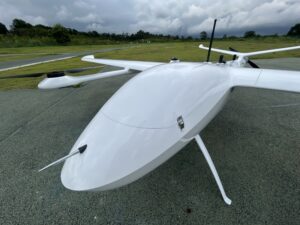
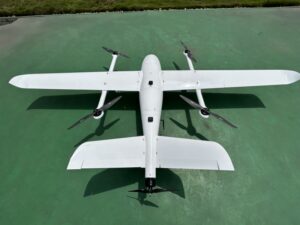
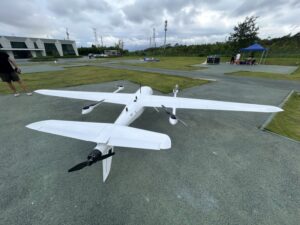
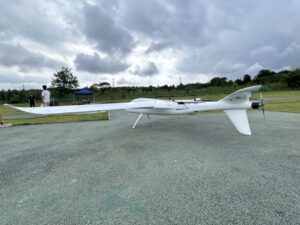
Controlled UAV categories may include certain fixed-wing drones, multirotor drones, unmanned helicopters, vertical takeoff and landing drones, long-range drones, heavy-lift drones, high-altitude drones, and unmanned airships. However, product form alone is not enough to determine control status. A small multirotor drone could be low-risk if used for consumer filming, while a larger industrial drone with a powerful payload system and long communication range may require more careful review.
Important technical factors may include:
- Maximum takeoff weight
- Empty weight
- Maximum payload capacity
- Flight endurance
- Maximum range
- Beyond-visual-line-of-sight capability
- Satellite navigation and autonomous routing
- Remote-control distance
- Communication encryption or anti-jamming capability
- Ability to carry specialized sensors
- Ability to operate at night or in harsh environments
- Integration with ground control stations
- Swarm control or multi-drone coordination capability
- Military or paramilitary end-use indicators
Because drone technology changes quickly, exporters should not rely only on general descriptions such as “civilian drone” or “industrial drone.” They should maintain detailed technical files for each model and version. A small design change, such as adding a different payload interface or increasing endurance, could change the compliance analysis.
Civilian Drones vs. Dual-Use Drones
The difference between civilian drones and dual-use drones is central to China’s export control system. A civilian drone is designed and sold for non-military applications such as photography, mapping, farming, inspection, education, or emergency response. A dual-use drone is a drone or drone-related technology that can be used for both civilian and military or security-sensitive purposes.
Many drones are dual-use by nature because the same platform can perform peaceful tasks or be adapted for harmful purposes. A mapping drone can create valuable construction site maps, but it could also map sensitive areas. A thermal drone can help firefighters find hot spots, but it could also support nighttime surveillance. A heavy-lift drone can deliver medicine to isolated areas, but it could also carry dangerous payloads if misused.
This dual-use character explains why export controls often focus on capability rather than marketing label. Calling a drone “civilian” does not automatically remove compliance obligations. Authorities and exporters may look at what the drone can actually do, not only how it is advertised.
For legitimate civilian users, this does not mean drones are unavailable. It means that documentation becomes more important. A mining company, farm operator, utility company, survey firm, or fire department may need to provide clear end-use information to help the exporter demonstrate that the shipment supports lawful civilian activities.
China Drone Export Control Table
| Product or Technology Category | Typical Civilian Use | Why It May Be Controlled | Possible Compliance Requirement |
|---|---|---|---|
| Complete UAV platform | Mapping, inspection, agriculture, logistics, public safety | May have long endurance, heavy payload capacity, extended range, or military adaptation potential | Technical classification, export license review if controlled |
| Agricultural drone | Crop spraying, seeding, farm management | May have large payload capacity and autonomous route planning | End-use confirmation and product classification |
| Mapping drone | Surveying, construction, mining, land management | May include RTK, PPK, LiDAR, high-resolution imaging, or long-range capability | Review of drone and payload specifications |
| Thermal imaging payload | Firefighting, inspection, search and rescue, solar farm inspection | Can be used for night surveillance or reconnaissance | Payload classification and end-user screening |
| Laser rangefinder module | Surveying, measurement, industrial inspection | Can support targeting, ranging, or reconnaissance functions | Technical parameter review and possible license |
| Hyperspectral camera | Agriculture, environmental monitoring, mineral exploration | Advanced sensing technology may have sensitive applications | Export control classification and documentation |
| UAV engine or propulsion system | Long-endurance UAVs, industrial drones, fixed-wing drones | Can improve range, endurance, and payload capability | Technical review and possible export license |
| Communication and data-link equipment | Remote control, live video, fleet management | May support long-range control, secure transmission, or beyond-visual-line-of-sight operation | Review of range, encryption, frequency, and end use |
| Ground control station | Industrial UAV operation and mission planning | Can support advanced UAV missions or multiple aircraft control | Classification and transaction screening |
| Counter-UAV system | Airport protection, prison security, event security, critical infrastructure protection | Can detect, jam, disable, or interfere with drones | Higher scrutiny, license review, end-user verification |
| Drone software and algorithms | Autonomous flight, mission planning, fleet management | May support autonomous operations, targeting, navigation, or swarm behavior | Technology export review and software control analysis |
| Spare parts and accessories | Maintenance, repair, replacement, after-sales service | Some parts may be controlled if designed for controlled UAV systems | Part-by-part classification and documentation |
Export License and Compliance Process
If a drone or drone-related item is controlled under Chinese rules, the exporter generally needs to apply for an export license before shipment. The license process is designed to allow government review of the product, buyer, destination, and intended use. Exporting a controlled item without a required license can create serious legal and commercial risks.
A typical compliance process may include the following steps:
- Identify the product: Confirm the exact drone model, version, configuration, payload, accessories, software, and technical data involved in the transaction.
- Collect technical specifications: Prepare details such as weight, endurance, range, payload capacity, communication distance, navigation method, sensor type, and special functions.
- Classify the item: Compare the product against China’s dual-use export control list, UAV control announcements, and related technical thresholds.
- Screen parties: Check the buyer, consignee, end user, distributor, and any intermediaries for restricted-party or high-risk indicators.
- Verify end use: Confirm the final application, industry, location, and whether the product will be used for lawful civilian purposes.
- Prepare documents: Collect contracts, invoices, technical descriptions, end-user certificates, end-use statements, import permits, and company registration documents where needed.
- Apply for license if required: Submit the required materials to the relevant Chinese authority and wait for approval.
- Coordinate customs declaration: Ensure that customs documents, HS codes, product descriptions, and licenses are consistent.
- Maintain records: Keep export documents, communications, classification records, licenses, and shipping records for compliance audits.
- Monitor post-export risks: Watch for re-export, diversion, resale to unauthorized users, or suspicious after-sales requests.
For exporters, classification should be done before confirming delivery dates. If a license is required, approval time may affect the shipment schedule. For buyers, the safest approach is to provide complete and transparent information at the beginning of the transaction. Incomplete end-use information can cause delays or order cancellation.
End-Use and End-User Compliance
End-use and end-user compliance is one of the most important parts of drone export control. A drone that is technically commercial may still create export control risk if the end user is military, sanctioned, involved in terrorism, linked to weapons development, or located in a high-risk region. Similarly, an ordinary drone may become sensitive if the intended use is surveillance, battlefield support, weapons delivery, or unauthorized re-export.
Exporters should ask several questions before accepting a drone export order:
- Who is the final end user?
- Is the buyer a distributor, reseller, government agency, private company, or individual?
- Where will the drone be used?
- What is the specific purpose of the drone?
- Will the drone be modified after export?
- Will the drone be re-exported to another country?
- Does the buyer refuse to provide end-use information?
- Does the order quantity match the buyer’s business profile?
- Are there signs of military, conflict-zone, or prohibited end-use risk?
- Does the buyer request unusual shipping routes, vague documentation, or false product descriptions?
Red flags should be investigated before shipment. Examples of red flags include vague end-use statements, unwillingness to identify the final user, requests to undervalue or misdescribe goods, routing through unrelated countries, inconsistent technical requirements, cash-only transactions, unusually large orders from unknown companies, or attempts to remove serial numbers and tracking information.
End-use compliance is also important for after-sales service. Software updates, spare parts, technical support, remote activation, and repair services may create additional compliance issues if the product has been transferred to an unauthorized user or location.
Impact on Overseas Buyers and Importers
China’s drone export controls affect overseas buyers in several ways. First, buyers may need to provide more documentation than before. A Chinese supplier may request end-user certificates, company registration documents, project descriptions, destination details, or import permits. This is not necessarily a sign that the supplier distrusts the buyer; it may be part of the supplier’s legal compliance process.
Second, buyers may experience longer lead times for controlled products. If a license is required, the supplier cannot legally ship until approval is obtained. Buyers should therefore avoid planning urgent projects based on unrealistic delivery schedules for high-performance drones, sensitive payloads, or counter-UAV equipment.
Third, some products may not be available for certain destinations or end users. A supplier may refuse to sell a drone if the destination is high risk, if the end use is unclear, or if the product falls under strict export control. Even when a product is physically available in China, legal permission to export it may not be automatic.
Fourth, importers must also comply with their own country’s import regulations. A drone may be exportable from China but still subject to import permits, radio frequency approval, aviation registration, customs duties, data security rules, remote ID requirements, or public procurement restrictions in the destination country. Buyers should check both Chinese export rules and local import rules before placing large orders.
Impact on Chinese Drone Manufacturers and Suppliers
For Chinese drone manufacturers and suppliers, export controls increase the importance of internal compliance programs. Companies that sell internationally need systems for product classification, customer screening, documentation, contract review, license management, distributor control, employee training, and recordkeeping.
Manufacturers may need to design product lines with compliance in mind. For example, a company may offer different versions of a drone for domestic, commercial export, and restricted applications. It may limit certain payload interfaces, communication ranges, firmware functions, or accessories for export markets. It may also create product documentation that clearly separates consumer, industrial, and controlled configurations.
Suppliers that ignore export controls may face serious risks. These risks can include customs detention, administrative penalties, reputational damage, loss of customers, contract disputes, government investigation, and restrictions on future exports. In sensitive industries such as UAVs, compliance is not only a legal requirement but also a business credibility factor.
Responsible suppliers often ask detailed questions before accepting orders. They may refuse transactions involving unclear buyers, suspicious destinations, military end-use concerns, or requests to mislabel products. While this may slow some sales, it protects the supplier, the buyer, and the long-term stability of the drone supply chain.
Practical Compliance Checklist for Drone Buyers
Overseas buyers who purchase drones from China can reduce risk by preparing compliance information early. The following checklist can help buyers and importers communicate more effectively with Chinese suppliers.
| Compliance Question | Why It Matters | Recommended Buyer Action |
|---|---|---|
| What exact drone model and configuration are being purchased? | Export control classification depends on technical details. | Request a full specification sheet and confirm payloads, software, accessories, and version numbers. |
| Is the drone or payload controlled under Chinese export rules? | Controlled items may require a license before export. | Ask the supplier to confirm classification and whether an export license is required. |
| Who is the final end user? | End-user identity affects export control risk. | Prepare end-user information, company documents, and project details. |
| What is the intended end use? | Civilian and prohibited uses are treated differently. | Provide a clear end-use statement, such as agriculture, surveying, inspection, or emergency response. |
| Where will the drone be operated? | Destination country and operating location may affect risk. | Disclose the final country and avoid unclear routing or unauthorized re-export. |
| Will the drone be resold or re-exported? | Diversion risk is a major compliance concern. | Explain distribution channels and obtain permission where required. |
| Does the destination country require import approval? | Export approval from China does not replace local import compliance. | Check customs, aviation, radio frequency, data security, and public procurement rules in the destination country. |
| Are spare parts and software updates included? | Parts, technology, and software may have separate compliance implications. | Ask the supplier whether after-sales items require additional review. |
| Is the shipment urgent? | License review can affect delivery time. | Build extra time into procurement planning for controlled or sensitive products. |
| Are documents accurate and consistent? | False descriptions can cause customs problems and legal risk. | Use accurate invoices, packing lists, HS codes, and product descriptions. |
Common Misunderstandings About China Drone Export Controls
Misunderstanding 1: China has banned all drone exports
This is incorrect. China has not banned all drone exports. Many civilian drones and commercial UAV products can still be exported. The issue is whether a specific drone, payload, component, destination, end user, or end use falls under export control rules.
Misunderstanding 2: Only military drones are controlled
This is also incorrect. Export controls often apply to dual-use items, not only military products. A drone designed for civilian use may still be controlled if it has sensitive capabilities, advanced sensors, long-range operation, or potential military applications.
Misunderstanding 3: If a product is sold online, it must be freely exportable
Online availability does not guarantee export legality. Some sellers may not understand export control requirements, and some platforms may list products that require additional review before international shipment. Buyers should not assume that a product page replaces compliance verification.
Misunderstanding 4: Only the aircraft matters
The aircraft is only one part of the compliance analysis. Payloads, cameras, thermal sensors, lasers, communication modules, software, ground control stations, and anti-drone equipment may be separately controlled.
Misunderstanding 5: The buyer has no role in Chinese export compliance
Buyers often play an important role because they provide end-use and end-user information. If a buyer refuses to provide clear information, the supplier may be unable or unwilling to proceed.
Misunderstanding 6: A shipment can be described as parts to avoid controls
Misdescription is risky and may violate customs and export control laws. Controlled components, spare parts, software, and technology may still require review even if shipped separately.
Future Outlook for China Drone Export Controls
China’s drone export controls are likely to remain dynamic. Drone technology is advancing quickly, and global security concerns around UAVs continue to grow. As drones become more autonomous, more powerful, and more integrated with artificial intelligence, sensing systems, and long-range communication networks, governments are likely to pay closer attention to cross-border drone trade.
Future controls may become more precise rather than simply broader. Regulators may focus on specific technical capabilities, such as swarm control, autonomous targeting, advanced navigation, high-end sensors, anti-jamming communication, heavy payload capacity, and counter-UAV systems. At the same time, China may continue to support legitimate civilian drone exports because drones are an important part of high-tech manufacturing and international trade.
For buyers and exporters, the best strategy is to build flexible compliance procedures. Instead of asking whether “Chinese drones are allowed or banned,” companies should ask more specific questions: What is the product? What are the technical specifications? Who is the end user? What is the end use? Where will it be used? Is any component or technology controlled? Is a license required? Are all documents accurate?
The companies that handle these questions professionally will be better positioned to continue trading drones legally and efficiently. The companies that ignore export controls may face delays, shipment seizures, reputational problems, or legal consequences.
In summary, China does control the export of certain drones, but China’s drone export control system is not a simple universal ban. It is a structured compliance framework that distinguishes between ordinary civilian exports, controlled dual-use items, sensitive end uses, and prohibited transactions. Any company buying or exporting Chinese drones should treat export control review as a standard part of international drone procurement.
FAQ
Does China control the export of drones?
Yes. China controls the export of certain drones, UAV systems, drone-related equipment, payloads, components, anti-drone systems, software, and dual-use technologies. However, China does not ban all drone exports. Many ordinary civilian and commercial drones may still be exported if they do not fall under controlled categories and do not involve prohibited end uses or high-risk end users.
What are China’s export controls on drones?
China’s export controls on drones include licensing requirements and restrictions for certain UAVs, drone components, drone payloads, communication systems, laser equipment, imaging sensors, UAV engines, ground control systems, counter-UAV systems, and related technologies. Controls depend on technical specifications, product classification, destination, end user, and end use.
How does China regulate drone exports?
China regulates drone exports through export control laws, dual-use item regulations, Ministry of Commerce announcements, control lists, customs supervision, export licensing procedures, and end-use and end-user review. Exporters must classify products, screen buyers, verify end use, apply for licenses when required, and declare shipments accurately to customs.
Are drones subject to export restrictions in China?
Some drones are subject to export restrictions in China. Drones with sensitive technical capabilities, advanced payloads, long endurance, heavy payload capacity, extended control range, autonomous operation, or possible military applications may require export review or licensing. Not every consumer or commercial drone is restricted.
What are China’s rules for exporting UAVs?
China’s rules for exporting UAVs require exporters to determine whether the UAV is controlled, verify technical specifications, screen the buyer and end user, confirm the intended use, prepare compliance documents, obtain an export license if required, and complete customs declaration properly. Controlled UAVs cannot be legally exported without approval.
Can I buy a drone from China without an export license?
It depends on the drone model, payload, destination, end user, and intended use. Many consumer drones and standard commercial drones may not require a special export license, but high-performance drones or drones with controlled payloads may require one. You should ask the supplier to confirm export control classification before purchase.
Are agricultural drones from China restricted for export?
Agricultural drones may be exportable for normal farming uses, but large agricultural drones can have significant payload capacity and autonomous route planning. Exporters may need to review technical specifications and end use. Buyers should provide clear agricultural use documentation when requested.
Are mapping drones from China subject to export controls?
Some mapping drones may require review, especially if they include RTK, PPK, LiDAR, high-end cameras, long-range data links, or advanced autonomous functions. Many mapping drones are used for legitimate civilian purposes, but the exact configuration must be checked against current export control rules.
Are thermal camera drones from China controlled?
Thermal camera drones may require additional compliance review because thermal imaging can be used in firefighting, inspection, search and rescue, surveillance, and security operations. Whether a specific thermal drone is controlled depends on the sensor specifications, drone capabilities, destination, and end use.
Are anti-drone systems controlled by China?
Counter-UAV or anti-drone systems may be subject to export controls because they can detect, interfere with, disable, or intercept drones. These systems can be sensitive due to their security and defense applications. Exporters should expect stricter documentation and licensing review for anti-drone products.
What documents may be required to export drones from China?
Documents may include product specifications, contracts, invoices, packing lists, export license applications, end-user certificates, end-use statements, buyer registration documents, import permits, customs declaration materials, and technical descriptions. The exact document package depends on whether the product is controlled.
What is an end-user certificate for drone exports?
An end-user certificate is a document that identifies the final user of the drone and confirms how the product will be used. It helps authorities and exporters evaluate whether the transaction involves prohibited military, terrorist, weapons proliferation, or other restricted end uses.
Can Chinese drone parts be exported freely?
Not always. Some drone parts may be exported through normal channels, but certain components such as specialized engines, communication modules, flight control systems, sensors, lasers, and controlled payloads may require classification and possibly an export license.
Does China control drone software exports?
China may control certain software and technology related to controlled drone systems, especially if the software supports autonomous operations, advanced mission planning, secure communication, swarm control, or sensitive UAV capabilities. Technology transfer can be subject to export control even when no physical drone is shipped.
What happens if a controlled drone is exported from China without a license?
Exporting a controlled drone without a required license can lead to customs detention, shipment seizure, administrative penalties, investigations, loss of export privileges, contract disputes, and reputational damage. Both exporters and buyers may face serious commercial consequences.
Do China’s drone export controls affect delivery time?
Yes. If a drone or payload requires export license review, delivery may take longer. Buyers should allow additional time for classification, documentation, license application, customs review, and logistics coordination.
Can a Chinese supplier refuse to sell drones because of export controls?
Yes. A supplier may refuse or delay an order if the product is controlled, the buyer refuses to provide end-use information, the destination is high risk, or the transaction creates compliance concerns. Responsible suppliers often conduct screening before shipment.
Are China’s drone export controls the same as import rules in my country?
No. China’s export controls are separate from the destination country’s import rules. Even if China permits export, the buyer may still need to comply with local aviation regulations, customs duties, radio frequency approvals, data security rules, public procurement restrictions, and drone registration requirements.
How can buyers reduce risk when importing drones from China?
Buyers can reduce risk by selecting reputable suppliers, requesting technical specifications, asking whether the product is export-controlled, providing accurate end-use information, checking local import laws, avoiding false declarations, and allowing enough time for license review if required.
Is China likely to keep regulating drone exports in the future?
Yes. China is likely to continue regulating drone exports because UAVs are important dual-use technologies. Future controls may focus more precisely on sensitive capabilities such as long-range operation, heavy payloads, advanced sensors, autonomous functions, swarm control, secure communication, and counter-UAV systems.