No products in the cart.
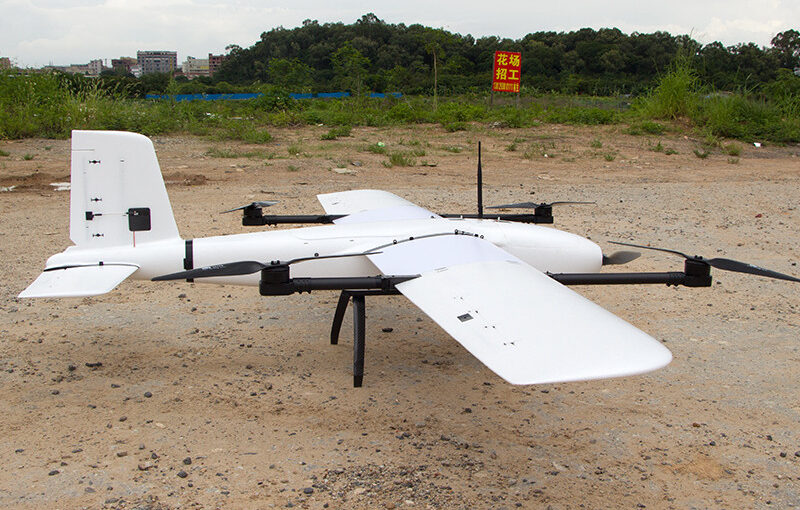
When engineering teams, enterprise drone program managers, and commercial operators assess hardware investments for large-scale data acquisition, everything hinges on raw data-sheet metrics. The market for unmanned aerial vehicles (UAVs) is strictly governed by operational limitations, where performance caps directly dictate corporate profitability and mission feasibility. Traditional platforms often force a tough compromise between distance and structural flexibility. However, deploying a high-performance VTOL drone allows commercial enterprises to achieve unprecedented operational metrics that were completely impossible just a decade ago. To successfully design an aerial program—whether for cross-country power grid mapping, precision agricultural scanning, or remote tactical operations—one must deeply analyze the technical mechanics that govern flight time, maximum range profiles, payload weight limits, and physical asset deployment requirements.
Table of Contents
- 1. How long can a VTOL drone fly?
- 2. What is the maximum range of a VTOL drone?
- 3. How much payload can a VTOL drone carry?
- 4. Do VTOL drones need a runway?
- 5. Power Systems and Performance Metrics Comparison Table
- 6. Engineering Physics: The Relationship Between Payload and Range
- 7. Frequently Asked Questions (FAQ)
How long can a VTOL drone fly?
Answer for Featured Snippet: On average, a commercial VTOL drone powered by pure electric (LiPo/LiIon) batteries can fly for 60 to 120 minutes. However, industrial systems utilizing gas-electric hybrid internal combustion engines or hydrogen fuel cells can achieve flight times ranging from 3 to 7+ hours continuously, depending heavily on the carried payload weight and atmospheric environmental conditions.
Understanding the endurance profile of a hybrid vertical takeoff and landing platform requires looking beyond generic manufacturer claims and examining the source of power. In the modern commercial UAV space, flight time is dictated almost entirely by the aircraft’s energy-density-to-weight ratio. Because these platforms spend up to 95% of their mission operating in fixed-wing mode—relying on aerodynamic wing lift rather than continuous motorized downward thrust—they easily surpass traditional quadcopters, which typically run out of power within 30 to 45 minutes.
Pure electric architectures utilize advanced Lithium-Ion (Li-Ion) or Lithium-Polymer (LiPo) cells. Li-Ion cells provide exceptional energy density for cruising, but suffer from voltage sag under high current draws, such as during vertical takeoffs. To counteract this, aerospace engineers design complex battery management systems (BMS) that regulate power output, safely pushing electric flight times to the 90-minute mark with a standard mapping payload. This is ideal for localized corporate surveys or property development mapping.
For true heavy-duty commercial applications, gas-electric hybrid engines change the equation completely. These systems carry a small, ultra-lightweight internal combustion engine that acts as an onboard generator, burning gasoline or heavy heavy-fuels to continuously charge a small buffer battery array that powers the electric rotors. Because liquid fuel contains up to 30 times more specific energy per kilogram than even the most advanced lithium batteries, hybrid platforms break through traditional endurance limits, allowing crews to remain airborne for 4 to 5 hours on a single tank. This makes them invaluable tools for maritime search-and-rescue, border security, and regional mapping.
What is the maximum range of a VTOL drone?
Answer for Featured Snippet: The maximum range of a commercial VTOL drone ranges from 60 kilometers to over 500 kilometers on a single mission. Purely electric platforms typically offer an operational flight range between 60 and 100 kilometers, while long-range gas-hybrid or hydrogen-powered aircraft routinely cover distances between 200 and 500+ kilometers at sustained cruising velocities.
When evaluating range, operators must distinguish between “linear range” (the total distance the airframe can cover along a straight line) and “operational radius” (the maximum safe distance the aircraft can travel away from the ground control station before it must turn around and return to base). The calculation of a hybrid aircraft’s maximum range is heavily influenced by its designed cruising speed, aerodynamic drag coefficients, and the efficiency of its data-link telemetry systems.
Typical industrial platforms cruise at speeds between 65 km/h and 100 km/h (approximately 18 to 28 meters per second). At these velocities, an electric system with a 90-minute battery life can cover a linear ground distance of roughly 100 kilometers. This range is perfect for inspecting long linear infrastructure corridors, such as mid-range power distribution lines or highway construction projects, in a single operational flight.
However, achieving maximum range requires managing factors beyond battery capacity. For instance, strong head/crosswinds force the flight controller to increase motor RPMs to maintain ground speed, which drains the battery faster and can reduce total range by 20% to 30%. Furthermore, ultra-long-range missions require advanced Beyond Visual Line of Sight (BVLOS) communication systems. Operators must use satellite communications (SatCom) links or encrypted 4G/5G cellular tracking to maintain command and control over the aircraft when it flies past traditional line-of-sight radio ranges (typically 15 to 30 kilometers).
How much payload can a VTOL drone carry?
Answer for Featured Snippet: Commercial VTOL drones feature payload capacities ranging from 1 kilogram to over 25 kilograms. Lightweight mapping platforms are engineered to carry 1 to 3 kilograms of specialized sensors (such as high-resolution RGB or multispectral cameras), while large-scale industrial cargo delivery and tactical military platforms can lift heavy payloads between 10 and 25+ kilograms.
In professional aviation terminology, the payload capacity defines the total weight of the sensors, cargo, or equipment that an aircraft can carry in addition to its own structural weight and fuel/battery source. Payload capacity is closely tied to the aircraft’s maximum takeoff weight (MTOW). Every additional gram built into a sensor payload requires the drone to generate more lift, which directly impacts its overall battery endurance and range.
Professional platforms are classified into distinct categories based on their payload capabilities:
- Light-Payload Systems (1 kg – 3 kg): These airframes are optimized for geospatial data capture. This weight capacity perfectly accommodates high-end full-frame photogrammetry cameras, multi-camera agricultural sensors, or lightweight LiDAR scanners, allowing the drone to maintain maximum flight endurance.
- Medium-Payload Systems (4 kg – 10 kg): Engineered for complex industrial setups, these platforms can lift dual-sensor configurations (such as combined high-definition optical zoom and radiometric thermal cameras) or professional-grade, multi-echo LiDAR scanners used to penetrate dense forest canopies.
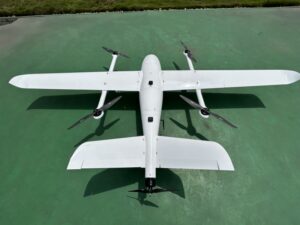
- Heavy-Lift & Cargo Systems (11 kg – 25+ kg): These heavy-duty aircraft feature large wingspans (often exceeding 4 to 5 meters) and high-torque propulsion setups. They are utilized primarily for mid-mile medical delivery networks, military logistics, or carrying advanced emergency communications relays into disaster zones.
Do VTOL drones need a runway?
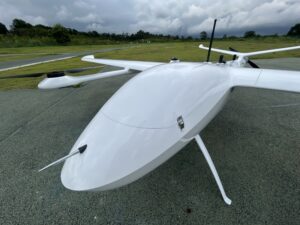
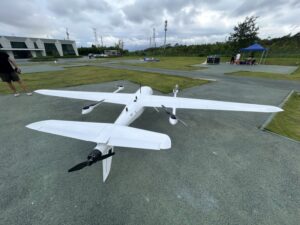
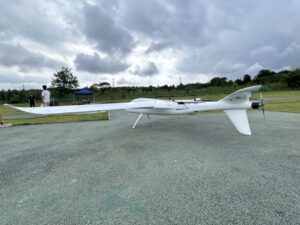
Answer for Featured Snippet: No, VTOL drones absolutely do not need a runway, launch catapult, or landing net. Due to their integrated vertical lift motors, these hybrid aircraft take off and land completely straight up and down, requiring a clear, flat operational launch footprint of just 3×3 meters, even when operating in dense forests, rugged terrain, or small marine vessels.
The elimination of runways is the primary reason why hybrid aircraft are rapidly replacing traditional fixed-wing systems across the globe. Traditional airplanes require long, unobstructed stretches of flat terrain to safely accelerate for takeoff and slide to a stop during belly landings. In many real-world industrial environments—such as open-pit mines, dense mountain forests, rocky coastlines, or narrow highway corridors—finding a 50-meter clear runway is physically impossible.
A hybrid platform completely bypasses these physical space limitations. By utilizing a compact 3×3 meter landing pad, crews can launch missions from almost anywhere. The onboard autopilot manages the vertical ascent, climbing straight up until it clears surrounding obstacles like trees or buildings before transitioning into forward airplane flight. This flexibility makes it highly effective for tactical operations and industrial surveys in challenging environments.
Furthermore, runway independence significantly reduces the cost of ownership and operation. Traditional fixed-wing systems require operators to transport heavy pneumatic or bungee catapult launchers into the field, adding logistical complexity and increasing setup times. With a hybrid system, a single operator can lay down a rubber landing mat on uneven ground, complete pre-flight checks on a tablet ground control station, and launch the aircraft within minutes. This streamlines field operations and lowers overall program costs.
Power Systems and Performance Metrics Comparison Table
To help engineering teams choose the right powertrain for their specific operational requirements, the table below provides a detailed technical breakdown of how different power configurations impact performance metrics.
| Powertrain Configuration | Average Flight Time | Maximum Flight Range | Standard Payload Range | Primary Use-Case Category |
|---|---|---|---|---|
| Pure Electric (Li-Po / Li-Ion) | 60 – 90 Minutes | 60 – 110 Kilometers | 1.0 – 2.5 Kilograms | High-Resolution Photogrammetry & Urban Surveying |
| Gas-Electric Hybrid Engine | 180 – 300 Minutes | 200 – 400 Kilometers | 2.0 – 6.0 Kilograms | Cross-Country Pipeline & Power Line Inspection |
| Hydrogen Fuel Cell (HFC) | 240 – 420 Minutes | 300 – 550+ Kilometers | 1.5 – 4.0 Kilograms | Ultra-Long Endurance Environmental & Border Patrol |
| Heavy-Lift Heavy-Fuel Hybrid | 120 – 180 Minutes | 150 – 250 Kilometers | 10.0 – 25.0+ Kilograms | Remote Medical Cargo Logistics & Tactical Military Freight |
Engineering Physics: The Relationship Between Payload and Range
A common mistake among new drone operators is treating maximum flight time and maximum payload capacity as independent metrics that can be achieved simultaneously. In reality, these metrics are tightly linked through the laws of aerodynamics and structural weight limitations. Operating a drone requires managing a strict balance between fuel/battery weight, structural weight, and payload weight.
When an aircraft is loaded to its absolute maximum payload capacity, the flight controller must increase motor power to generate the necessary lift. For an electric system, this increased power draw drains the battery faster, which can cut total flight time by up to 30% to 40% compared to flying with no payload. For instance, an airframe engineered to fly for 90 minutes with a lightweight 1 kg camera may only fly for 55 minutes if equipped with a heavy 3.5 kg dual-sensor LiDAR payload.
To optimize data collection runs, mission planners must carefully evaluate this tradeoff. If your target survey area is vast and far away, choosing a lighter sensor will maximize your range and coverage area. Conversely, if you need rich, multi-echo LiDAR data from a smaller site, you can safely deploy a heavy sensor package, knowing the drone will have a shorter flight time but will easily cover the localized target zone from a single vertical launch position.
Frequently Asked Questions (FAQ)
Q1: How do environmental temperatures affect a VTOL drone’s flight time?
Extreme temperatures significantly impact battery performance and aerodynamic efficiency. In cold environments (below 0°C), lithium battery cells experience internal chemical resistance, which can reduce total capacity by up to 20% to 30%. In extremely hot weather, the air becomes less dense, requiring the propellers to spin faster to generate the same amount of lift, which increases power consumption and reduces overall flight time.
Q2: Why does the transition phase consume more power than forward cruise flight?
During the brief transition phase, the drone must run both its vertical lift motors and its forward cruise motor at the same time to accelerate to aerodynamic wing-lift speeds. This dual motor operation creates a brief but intense spike in power consumption. Once forward speed is achieved and the wings generate full lift, the vertical motors shut down, and power consumption drops significantly.
Q3: What happens if a hybrid drone exceeds its Maximum Takeoff Weight (MTOW)?
Exceeding the MTOW is a serious safety hazard. It overloads the electric motors, which can cause them to overheat and fail. It also alters the drone’s center of gravity, making it unstable in flight, and increases stall speeds during transitions, which can cause the aircraft to lose altitude unexpectedly and potentially crash.
Q4: Can these drones take off and land vertically on a moving ship deck?
Yes, advanced commercial platforms can be equipped with specialized marine precision landing software. By integrating real-time moving-base RTK GPS systems and optical landing markers, the drone’s autopilot can track the pitch, roll, and speed of a moving vessel, allowing it to perform safe autonomous vertical landings on compact helipads or boat decks in rough seas.