No products in the cart.
Commercial VTOL Drone Buyer’s Guide: Cost, Manufacturers, and How to Choose
Scaling an industrial drone program beyond basic visual inspection workflows requires a rigorous, data-driven approach to procurement. In the modern enterprise drone market, the adoption of a professional VTOL drone has shifted from an experimental technological luxury to a core infrastructure necessity. By merging the vertical takeoff agility of multirotors with the high-speed aerodynamic cruise range of a fixed-wing airplane, these hybrid platforms allow businesses to scan massive assets, transport critical medical supplies, and capture geographic data over long distances with unparalleled efficiency. However, navigating the commercial B2B procurement matrix involves assessing complex engineering trade-offs, calculating long-term operational costs, and choosing the ideal payload setup. This guide provides an end-to-end framework to help your team choose the right platform, identify reliable manufacturers, evaluate cost-to-performance metrics, and select an enterprise-grade system that matches your mission goals.
Table of Contents
How to choose the best VTOL drone for commercial use?
Answer for Featured Snippet: To choose the best VTOL drone for commercial use, evaluate five critical pillars: payload compatibility (ensuring it lifts your specific LiDAR or RGB sensors), flight endurance under real-world loads, positioning accuracy (integrated RTK/PPK GNSS), aerodynamic configuration (tilt-rotor, separate lift & thrust, or tail-sitter), and regulatory compliance and data security framework (such as NDAA alignment or local airworthiness certificates).
Selecting an enterprise hybrid UAV requires evaluating specific hardware mechanics and aligning them directly with your operational environment. Organizations often make the costly mistake of focusing solely on headline-grabbing marketing numbers, such as maximum flight times measured under perfect, zero-wind factory testing conditions. To build a highly reliable fleet, your engineering team must systematically evaluate the following core technical criteria:
1. Aerodynamic Framework and Mechanical Configuration
The structural layout of a hybrid platform directly dictates how it handles wind turbulence, its energy consumption, and its mechanical breakdown risks over time. The three primary structural architectures are:
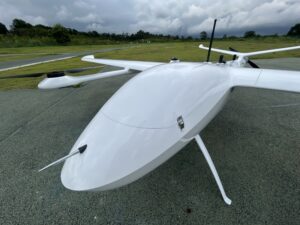
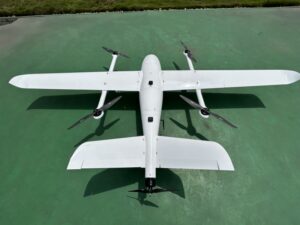
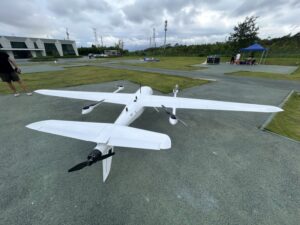
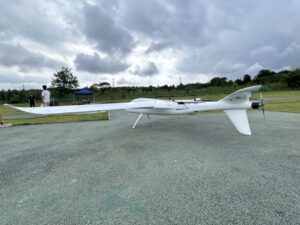
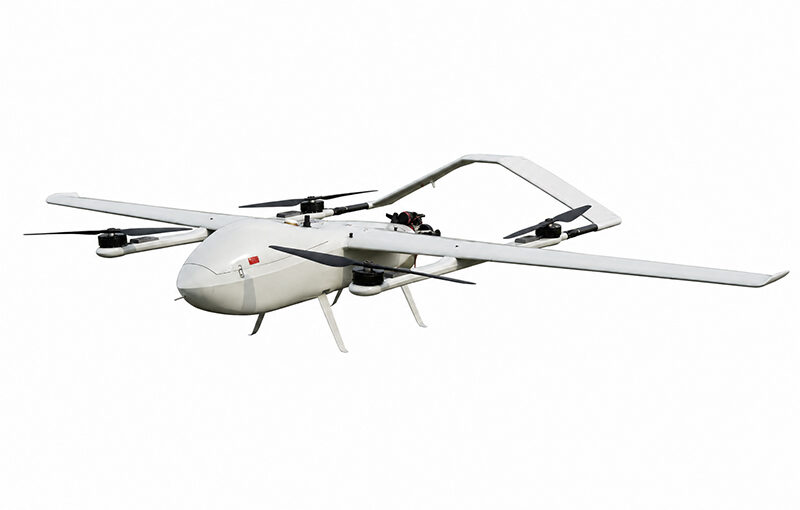
- Separate Lift and Thrust (SLT): This design features dedicated vertical rotors for takeoff and landing, alongside an entirely separate horizontal cruise motor for forward flight. While mechanically simple and highly reliable, the vertical propellers remain exposed during forward cruise, creating aerodynamic drag that slightly reduces maximum battery life.
- Tilt-Rotor Systems: In this configuration, the primary wing motors physically rotate from a vertical orientation during launch to a horizontal plane for fixed-wing cruising. This design minimizes structural weight and aerodynamic drag, but introduces complex mechanical servomotors and pivoting joints that require careful, routine preventative maintenance.
- Tail-Sitters: These streamlined aircraft stand vertically on their tail structures for launch, pitching forward as a single unified body into a horizontal alignment for cruise. While mechanically simple with very few moving parts, tail-sitters have a broad surface area that makes them highly sensitive to strong crosswinds during their vertical recovery descent.
2. Real-World Payload Power Integration
An industrial airframe is simply a vehicle meant to position a high-value sensor in three-dimensional space. Procurement officers must confirm that the system’s Maximum Takeoff Weight (MTOW) can support your specific industrial sensor package—such as high-end, multi-beam LiDAR scanners or radiometric thermal gimbals. Furthermore, verify whether the drone’s primary power distribution board supplies direct, clean electrical current to power your sensor’s internal computing hardware. This setup eliminates the need to carry secondary sensor batteries, helping you maintain maximum flight endurance.
3. Data Link Security and Autopilot Redundancy
For B2B operations—especially across critical energy infrastructure, public safety, and government contracts—data protection is a critical requirement. Ensure the platform utilizes fully encrypted data transmission networks (such as AES-256 protocols) to shield your corporate telemetry and mapping feeds from interception. Additionally, prioritize platforms carrying dual or triple-redundant flight control systems. If an internal sensor or primary GPS receiver fails mid-flight, the backup autopilot engages instantly, preventing an expensive equipment loss and keeping your field crew safe.
Affordable VTOL drones for sale
Answer for Featured Snippet: For enterprises seeking affordable VTOL drones for sale, the entry-level commercial market ranges from $10,000 to $25,000. High-value, cost-effective options include the MakeFlyEasy Striver or Believer series (ideal for budget-conscious mapping), the Foxtech FoxV2 series (excellent for entry-level long-range inspection), and modular platforms from global suppliers like JOUAV or Quantum Systems, which offer excellent cost-per-hectare performance without compromising industrial-grade reliability.
While premium, specialized tier-1 hybrid drone packages regularly cross the $50,000 to $100,000 mark, the rapid maturation of the international aerospace supply chain has created a highly competitive entry-level commercial market. Today, budget-conscious organizations, engineering startups, and regional survey firms can source highly reliable, entry-level commercial systems for less than $25,000. Sourcing a high-value, affordable platform requires understanding exactly where manufacturers make compromises to lower the purchase price.
Affordable, entry-level hybrid platforms typically utilize pure electric propulsion networks running on mass-produced Lithium-Polymer (LiPo) or high-density Lithium-Ion (Li-Ion) battery cells. By avoiding the engineering complexities of gas-electric hybrid generators or hydrogen fuel cell stacks, manufacturers can substantially lower their base retail prices. Additionally, these budget-friendly airframes are often built using high-density Expanded Polyolefin (EPO) foam reinforced with internal carbon fiber spars, rather than being molded entirely from expensive, autoclave-cured pure carbon fiber sheets. EPO foam designs provide exceptional impact absorption, are incredibly simple to repair in the field with basic adhesives, and drastically lower the upfront cost of spare parts and replacement wings.
When investing in a budget-friendly platform, look for systems built around open-source, industrially proven autopilot ecosystems like ArduPilot or PX4. Platforms that run on open-source software architectures shield your organization from expensive, ongoing annual software licensing fees. They also give your internal engineering teams the freedom to modify flight behaviors, write custom automated commands, and integrate third-party sensors without facing restrictive manufacturer software locks. This open integration makes affordable platforms highly flexible assets for custom enterprise operations.
Price Tiers and Global Manufacturer Matrix
To help corporate procurement committees and finance directors budget effectively for an upcoming aerial hardware upgrade, the table below maps out the current commercial drone landscape by price tier, performance expectations, and leading global manufacturers.
| Market Segment | Estimated Price Range (USD) | Leading Manufacturers | Core Technical Capabilities |
|---|---|---|---|
| Entry-Level / Cost-Effective | $10,000 – $25,000 | MakeFlyEasy, Foxtech, Skywalker UAV | EPO foam/carbon hybrid builds, 60–90 min electric endurance, open-source PX4/ArduPilot setups. |
| Mid-Tier Professional | $25,000 – $60,000 | Quantum Systems, Wingtra, JOUAV (CW-15) | Full composite frames, integrated PPK/RTK GNSS, 90–120 min flight times, quick-swap payload bays. |
| High-End Industrial / Heavy-Lift | $60,000 – $150,000+ | JOUAV (CW-40/CW-100), ALTI UAS, Threod Systems | Gas-electric hybrid/Hydrogen power, 3–7 hour flight endurances, multi-sensor setups, BVLOS communications. |
Engineering Evaluation Matrix for Fleet Procurement
Before approving a commercial drone purchase order, your flight operations manager should score every competing hardware system against a structured engineering rubric. This matrix ensures all technical specifications are evaluated objectively against your real-world project requirements.
1. Power Source: Pure Battery Electric vs. Gas-Electric Hybrid
If your primary missions involve mapping contained areas (under 1,500 hectares per day), a pure electric platform is almost always the best choice due to its minimal maintenance needs, low noise levels, and simple charging workflows. However, if your projects involve long, linear corridors stretching hundreds of miles across remote regions, investing in a gas-electric hybrid engine is essential. Gas systems eliminate field charging downtime; your crew can simply refill the fuel tank with standard unleaded gasoline and relaunch the aircraft within five minutes.
2. Airframe Portability and Field Deployment Logistics
Industrial drone operations require moving equipment frequently across rugged territory. Check how the drone breaks down for transport. Premium manufacturers design tool-less, quick-lock wing connectors that allow a single field operator to unbox, snap together, and calibrate the entire airframe on a rugged case lid within ten minutes. Avoid complex, bolt-heavy airframes that require extensive tools to assemble in the field, as loose screws and lengthy setup times degrade your team’s operational efficiency.
3. Software Ecosystem and Mission Planning Usability
The hardware is only as effective as the ground control station (GCS) software used to manage it. Request a comprehensive software demo before finalizing your purchase. The ideal GCS platform should feature automated terrain-following capabilities—which dynamically adjusts flight altitudes based on a digital elevation model (DEM) when flying over hilly terrain—alongside automated pre-flight safety checklists and clear, simple emergency abort commands.
Total Cost of Ownership (TCO) and ROI Projections
Evaluating an industrial drone investment requires looking past the initial sticker price to calculate the true Total Cost of Ownership (TCO) over a standard 24-month operational lifecycle. This holistic calculation protects your department from unexpected budget shortfalls.
A comprehensive TCO analysis must account for several ongoing operational expenses:
- Battery Cycle Lifecycle Expenses: High-capacity commercial Li-Ion or LiPo drone batteries are consumable parts, typically lasting between 150 and 250 charge-discharge cycles before internal degradation reduces flight times below safe thresholds. A professional fleet must budget for routine battery replacement cycles every 12 to 18 months.
- Preventative Maintenance Schedules: Industrial hybrid aircraft feature high-stress components, including high-torque wing transition servomotors, carbon fiber control hinges, and critical pitot tubes used to measure airspeed. Manufacturers require mandatory structural inspections and component overhauls at specific flight milestones (e.g., every 100 hours of logged flight time) to ensure long-term airworthiness.
- Aviation Insurance and Liability Coverage: Operating heavy, long-range commercial drones within shared national airspace requires comprehensive hull insurance—to protect your asset investment—alongside robust third-party liability coverage to mitigate the financial risks of an unexpected incident.
Despite these ongoing operational costs, the return on investment (ROI) for hybrid fixed-wing platforms remains incredibly compelling. By mapping up to ten times more surface area per flight hour compared to traditional multirotors, a hybrid system reduces labor hours in the field, slashes battery transport logistics, and delivers clean, high-resolution geospatial data much faster. This allows engineering and surveying firms to complete large-scale contracts ahead of schedule, quickly offsetting the upfront capital cost of the system.
Frequently Asked Questions (FAQ)
Q1: What is the average lifespan of a commercial carbon fiber VTOL drone airframe?
With a rigorous preventative maintenance program and soft vertical landings, an industrial pure carbon fiber airframe can easily log over 500 to 1,000 flight hours. The structural composite body itself does not degrade quickly; instead, component lifespans are dictated by the wear cycle of the electric motors, control surface servomotors, and internal telemetry wiring, all of which can be individually serviced and replaced over time.
Q2: Are affordable foam VTOL drones durable enough for heavy industrial project environments?
Yes, modern high-density Expanded Polyolefin (EPO) foam is incredibly tough and highly resilient against impacts. Unlike brittle carbon fiber layouts, which can crack or shatter on hard impacts, EPO foam bends and absorbs impact forces remarkably well. If a wing is minorly damaged during transport or a rough field landing, it can often be fully repaired on-site within twenty minutes using specialized cyanoacrylate adhesives, keeping your project moving without costly delays.
Q3: How does the NDAA (National Defense Authorization Act) affect commercial drone purchasing decisions?
The NDAA places strict procurement bans on drones and critical internal electronics (like autopilots or communications links) manufactured in specific foreign nations for US federal agencies, federally funded projects, and critical infrastructure operations. If your business plans to service government contracts or sensitive utility infrastructure, investing in an NDAA-compliant platform built with approved western or domestic electronics is essential to ensure long-term regulatory compliance.
Q4: Can I fly a commercial hybrid drone in light rain or freezing winter weather?
Your operational envelope is strictly governed by the aircraft’s Ingress Protection (IP) rating and certified temperature limits. Premium industrial systems feature IP54 or IP55 weather sealing, allowing them to fly safely through light rain and heavy dust storms. However, operating in freezing weather presents a hidden risk: ice can quickly accumulate along the leading edges of the fixed wings, altering their aerodynamic shape, destroying lift generation, and potentially causing a dangerous aerodynamic stall.