No products in the cart.
China’s drone export industry has become one of the most important forces in the global UAV market. From consumer camera drones and agricultural spraying UAVs to industrial inspection drones, fixed-wing VTOL platforms, logistics drones, and drone components, Chinese manufacturers have built a powerful global position through scale, supply-chain depth, fast product iteration, and aggressive price-performance advantages.
The growth of China’s drone exports is not driven by one single factor. It is the result of a complete industrial ecosystem: electronics manufacturing, battery technology, flight-control systems, camera modules, AI software, sensor integration, carbon-fiber processing, motor production, and strong domestic demand. At the same time, the global market has changed. Buyers are no longer looking only for hobby drones. Governments, farms, construction companies, mining operators, energy firms, logistics providers, and emergency-response agencies are increasingly adopting UAVs as practical productivity tools.
However, China’s drone export market is also becoming more complex. Export controls, geopolitical pressure, data-security concerns, and restrictions in markets such as the United States are reshaping the industry. China is still highly competitive, but the next stage of growth will be more regulated, more specialized, and more focused on industrial applications rather than simple consumer-drone expansion.
This article explores the major factors driving China’s drone export growth, the key trends in Chinese UAV exports, how the market has changed in recent years, the future outlook, and whether China will continue to dominate the global drone market.
What Factors Are Driving the Growth of China’s Drone Exports?
China’s drone exports are growing because the country combines manufacturing scale, a mature electronics supply chain, competitive pricing, strong domestic demand, and fast innovation in commercial UAV applications. Global demand for drones in agriculture, mapping, inspection, logistics, public safety, and low-altitude services is also expanding, creating a large export opportunity for Chinese manufacturers.
1. China Has the World’s Most Complete Drone Supply Chain
One of the biggest reasons China’s drone exports are growing is its complete UAV supply chain. A drone is not a single product. It is a complex system made from hundreds of components, including:
- Motors
- Propellers
- Electronic speed controllers
- Flight controllers
- GPS modules
- RTK modules
- IMUs
- Batteries
- Battery management systems
- Gimbals
- Cameras
- Thermal sensors
- LiDAR payloads
- Carbon-fiber frames
- Plastic injection parts
- Radio-control systems
- Video-transmission modules
- Ground-control stations
- Software platforms
China has suppliers for nearly every part of this value chain. This allows Chinese drone manufacturers to reduce costs, shorten product-development cycles, and scale production quickly. Shenzhen, Guangdong, and other manufacturing hubs give UAV companies access to electronics, sensors, batteries, tooling, and assembly partners in close geographic proximity.
This supply-chain density is difficult for other countries to replicate quickly. Even when overseas brands design drones locally, many still rely on Chinese components for batteries, motors, propellers, frames, gimbals, cameras, or other parts.
2. Cost Advantage Makes Chinese Drones Attractive to Global Buyers
Chinese drones are often competitive because they offer strong performance at relatively low prices. This price-performance advantage is especially important for buyers in emerging markets.
For example, a farm in Southeast Asia, Latin America, or Africa may not be able to afford expensive Western UAV systems, but it may be able to purchase Chinese agricultural spraying drones with practical autonomous functions, RTK positioning, large tanks, and spare parts support.
The same logic applies to:
- Construction companies using mapping drones
- Mining companies using survey drones
- Power utilities using inspection drones
- Security firms using patrol drones
- Disaster-response agencies using emergency UAVs
- Logistics companies testing cargo drones
For many buyers, Chinese drones provide a balance of acceptable quality, advanced features, and lower acquisition cost.
3. China’s Domestic UAV Market Creates Scale
China’s large domestic market is another key driver of export growth. By the end of 2025, China had nearly 3.29 million registered UAVs, representing a 51% year-on-year increase, according to data released by the Civil Aviation Administration of China. This rapid domestic growth gives manufacturers a huge testing ground for new products, applications, and business models. ([en.ce.cn])
A large domestic UAV market helps exporters in several ways:
| Domestic Market Advantage | How It Supports Drone Exports |
|---|---|
| Large production volume | Reduces unit cost and improves economies of scale |
| Diverse use cases | Helps manufacturers develop drones for agriculture, inspection, logistics, and public safety |
| Fast product feedback | Allows companies to improve reliability and software quickly |
| Local supplier competition | Lowers component prices and improves innovation |
| Pilot training demand | Creates a professional ecosystem around drone operations |
| Regulatory experimentation | Supports new applications such as drone delivery and low-altitude flight services |
Because China has a large home market, drone companies can improve their products before selling them internationally. This gives exporters a stronger foundation than companies that rely only on small domestic markets.
4. The Low-Altitude Economy Is Creating a New Growth Engine
China’s “low-altitude economy” has become a major policy and industrial priority. This sector includes drones, eVTOL aircraft, aerial logistics, inspection services, emergency rescue, urban air mobility, and low-altitude infrastructure.
Official Chinese media and policy-related reports have described the low-altitude economy as a rapidly expanding sector, with projections reaching around 1.5 trillion yuan in 2025. The sector includes drone delivery, aerial sightseeing, and other industries operating below 1,000 meters. ([english.news.cn])
This matters for drone exports because domestic investment in low-altitude infrastructure strengthens the entire UAV ecosystem. When China builds more drone routes, pilot-training systems, low-altitude flight service stations, logistics networks, and regulatory frameworks, Chinese drone manufacturers gain experience that can later be exported as complete solutions.
In other words, China is not only exporting drone hardware. It is increasingly capable of exporting:
- Drone fleet systems
- Drone docks
- Automated inspection platforms
- Agricultural UAV solutions
- Logistics drone systems
- Low-altitude traffic-management experience
- Training and service models
- UAV software platforms
5. Strong Battery and Electric Mobility Ecosystem
Drones depend heavily on batteries. Flight time, payload capacity, safety, and operating cost are all influenced by battery performance.
China’s broader leadership in lithium batteries, electric vehicles, energy storage, and battery manufacturing directly benefits its drone industry. UAV manufacturers can source batteries, battery-management systems, chargers, and power components from a highly developed domestic ecosystem.
This advantage is especially important for:
- Agricultural drones carrying heavy liquid tanks
- Cargo drones requiring high payload capacity
- Long-endurance mapping UAVs
- Industrial inspection drones
- Emergency-response UAVs
- Drone-in-a-box systems requiring frequent charging
As drone applications become more industrial, battery performance becomes more important. China’s strength in this area supports export competitiveness.
6. Global Demand for Industrial Drones Is Rising
The growth of China’s drone exports is also driven by rising international demand. Drones are no longer seen mainly as photography gadgets. They are becoming productivity tools across many industries.
Major export demand comes from:
| Industry | Common Drone Applications |
|---|---|
| Agriculture | Spraying, seeding, crop monitoring, field mapping |
| Energy | Power-line inspection, wind-turbine inspection, solar-farm inspection |
| Oil and gas | Pipeline monitoring, refinery inspection, leak detection |
| Mining | Site mapping, volume calculation, safety monitoring |
| Construction | Progress tracking, surveying, 3D modeling |
| Public safety | Search and rescue, crowd monitoring, firefighting support |
| Logistics | Cargo delivery, medical delivery, remote-area transport |
| Environmental protection | Forest monitoring, wildlife tracking, water-quality inspection |
| Maritime | Coastal patrol, ship inspection, search missions |
Chinese manufacturers are well positioned to serve these markets because they can offer both standard models and customized systems.
7. OEM and ODM Flexibility Supports Export Growth
Many Chinese drone companies offer OEM and ODM services. This means overseas buyers can purchase drones under their own brands or request customized features.
Common customization options include:
- Custom airframe design
- Payload integration
- Logo and branding
- Software localization
- Flight-time optimization
- Frequency adjustment
- Camera or sensor selection
- Agricultural tank size changes
- Ground-station interface customization
- Industrial packaging
- Spare-parts kits
This flexibility is attractive for distributors, system integrators, agricultural equipment companies, and local drone brands in foreign markets.
8. Chinese Manufacturers Iterate Products Quickly
Chinese drone companies are known for rapid product iteration. Because they are close to suppliers and manufacturing partners, they can redesign parts, test new payloads, improve software, and release updated models faster than many competitors.
Fast iteration helps exporters respond to market demands such as:
- Longer flight time
- Higher payload capacity
- Better obstacle avoidance
- More stable video transmission
- Improved weather resistance
- Better RTK accuracy
- More autonomous flight modes
- Easier maintenance
- Stronger foldable frames
- Better battery safety
In competitive export markets, speed matters. A company that can update its product every year has an advantage over one that takes several years to release a new model.
9. Chinese Brands Have Built Global Recognition
China’s drone export growth is also supported by brand recognition. DJI remains the best-known Chinese drone company and continues to dominate large parts of the consumer and prosumer drone market. Industry reports and market analyses in 2025 still described DJI as holding a very large share of the global civilian drone market, with estimates often placing it around 70% to 80% or higher depending on the segment. ([thedronegirl.com])
This brand recognition creates a halo effect for the broader Chinese drone industry. Buyers around the world know that Chinese companies can produce advanced, reliable, and affordable UAVs.
Although DJI is the most visible brand, China’s export ecosystem also includes agricultural drone companies, industrial UAV manufacturers, component suppliers, mapping-drone developers, and many OEM/ODM factories.
10. Drone Components Are a Hidden Export Strength
China’s drone export growth is not limited to complete drones. Components are a major part of the story.
Many international drone companies rely on Chinese parts, including:
- Brushless motors
- Propellers
- Batteries
- ESCs
- Carbon-fiber frames
- Camera gimbals
- Remote controllers
- Communication modules
- Payload mounts
- Flight-control accessories
- Chargers
- Repair parts
Even if a drone is assembled outside China, its supply chain may still depend heavily on Chinese manufacturers. This gives China strong influence in the global UAV industry.
What Are the Key Trends in Chinese UAV Exports?
The key trends in Chinese UAV exports include a shift from consumer drones to industrial systems, rising demand for agricultural drones, growth in fixed-wing VTOL platforms, greater focus on payload-integrated UAVs, expansion of drone components, stricter export controls, and increasing demand for complete drone solutions rather than simple hardware.
1. From Consumer Drones to Industrial UAVs
In the early stage of China’s global drone rise, consumer camera drones were the most visible export category. Today, consumer drones remain important, but industrial UAVs are becoming a stronger growth driver.
Industrial UAV exports include drones for:
- Power-line inspection
- Solar-panel inspection
- Wind-turbine inspection
- Pipeline patrol
- Mine surveying
- Construction mapping
- Traffic monitoring
- Emergency rescue
- Forest fire prevention
- Border patrol
- Environmental monitoring
This trend is important because industrial drones usually have higher unit value than consumer drones. A consumer camera drone may sell for hundreds or thousands of dollars, while a professional inspection drone with thermal imaging, RTK, AI software, and enterprise support can cost much more.
2. Agricultural Drones Are Becoming a Major Export Category
Agricultural drones are one of the strongest export categories for Chinese UAV companies. These drones are used for:
- Crop spraying
- Fertilizer spreading
- Seeding
- Orchard spraying
- Pest control
- Crop-health monitoring
- Field mapping
- Precision agriculture
The demand is especially strong in regions with large farms, labor shortages, or difficult terrain. Chinese agricultural drones often provide a compelling combination of large payload capacity, autonomous route planning, obstacle avoidance, and competitive pricing.
Agricultural drone exports are likely to continue growing because many countries are still in the early stage of farm automation.
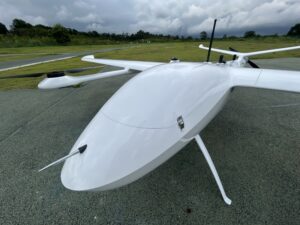
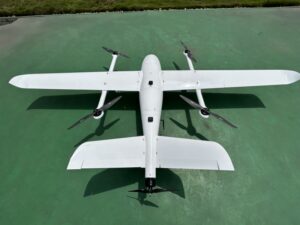
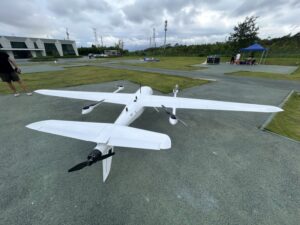
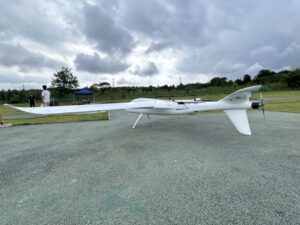
3. Fixed-Wing VTOL Drones Are Gaining Popularity
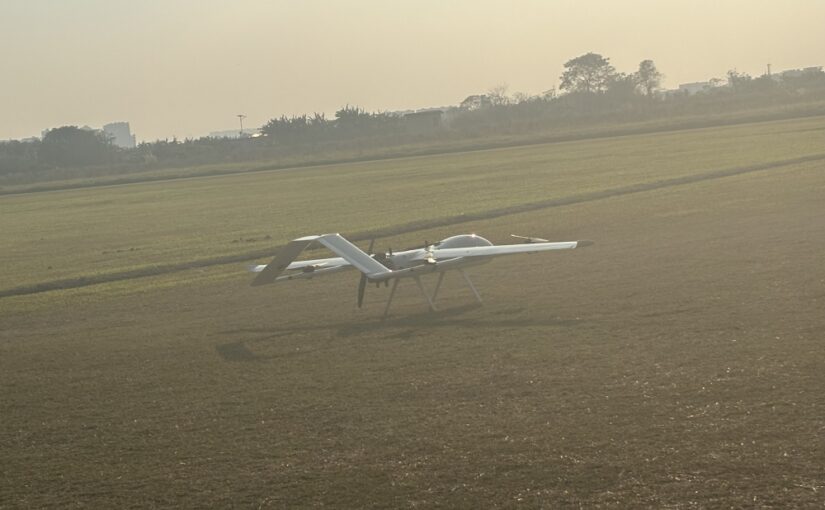
Fixed-wing VTOL drones are increasingly important in Chinese UAV exports. These aircraft combine vertical takeoff and landing with efficient long-distance flight.
They are useful for:
- Large-area mapping
- Border patrol
- Pipeline inspection
- Coastal monitoring
- Mining surveys
- Forest monitoring
- Disaster assessment
- Long-range environmental missions
Unlike traditional fixed-wing drones, VTOL drones do not need runways. Unlike multirotor drones, they can cover much larger areas. This makes them attractive for professional buyers.
4. Payload Integration Is Driving Higher Export Value
Modern UAV exports are increasingly defined by payloads rather than airframes alone. A drone’s value depends heavily on what it carries.
High-value payloads include:
- LiDAR scanners
- Thermal cameras
- Multispectral cameras
- Hyperspectral sensors
- Zoom cameras
- EO/IR systems
- Gas-detection sensors
- Searchlights
- Loudspeakers
- Delivery boxes
- Mapping cameras
- Agricultural spraying systems
This trend means Chinese exporters can increase revenue by selling complete systems instead of basic drones.
5. Drone-in-a-Box Systems Are Emerging
Automated drone docks, also called drone-in-a-box systems, are becoming more popular. These systems allow drones to operate with minimal human intervention.
They can support:
- Automated security patrols
- Power-substation inspection
- Construction-site monitoring
- Smart-city surveillance
- Emergency response
- Environmental monitoring
- Remote facility inspection
A drone dock typically includes automatic landing, charging, weather protection, remote scheduling, data upload, and cloud-based fleet management. This is a higher-value export category than standard drone hardware.
6. Export Controls Are Reshaping the Market
China adjusted UAV export controls in July 2024, updating rules for certain drones and drone-related items. The controls focus on products with sensitive or potential dual-use applications. ([english.www.gov.cn])
This trend is critical. Chinese drone exports are not simply expanding freely in every category. Exporters must now pay more attention to:
- Product specifications
- Flight range
- Payload capacity
- Sensor type
- End user
- End use
- Destination country
- Customs classification
- Export licensing
- Dual-use restrictions
For ordinary commercial drones, exports may continue. For sensitive long-range UAVs, advanced imaging systems, or dual-use components, compliance requirements may become stricter.
7. Regional Demand Is Diversifying
Chinese drones are exported to many regions, including Southeast Asia, the Middle East, Latin America, Africa, Europe, and Central Asia.
Different regions have different demand patterns:
| Region | Main Demand for Chinese Drones |
|---|---|
| Southeast Asia | Agriculture, plantation spraying, mapping, disaster response |
| Middle East | Oil and gas inspection, security, border monitoring, smart cities |
| Latin America | Agriculture, mining, forestry, infrastructure survey |
| Africa | Agriculture, medical delivery, mapping, wildlife monitoring |
| Europe | Inspection, surveying, environmental monitoring, specialized industrial uses |
| Central Asia | Infrastructure, border patrol, agriculture, energy inspection |
| United States | Consumer and commercial drones, but with strong political restrictions |
This regional diversification helps Chinese exporters reduce dependence on any single market.
8. Buyers Want Complete Solutions
International buyers increasingly want more than drones. They want complete operational solutions.
A complete UAV export package may include:
| Solution Element | Why It Matters |
|---|---|
| UAV platform | Provides the aircraft for the mission |
| Payload | Determines the actual application value |
| Ground station | Enables mission planning and control |
| Software | Converts flight data into useful business output |
| Training | Helps buyers operate drones safely |
| Spare parts | Reduces downtime |
| Maintenance manuals | Supports long-term use |
| Compliance documents | Helps import clearance and local certification |
| After-sales service | Builds buyer confidence |
This trend favors Chinese exporters that can provide integrated systems and support, not just low-cost hardware.
How Has China’s Drone Export Market Changed in Recent Years?
China’s drone export market has changed from a consumer-drone-centered industry into a more diversified, industrial, regulated, and solution-oriented export sector. In recent years, growth has shifted toward agricultural UAVs, inspection drones, fixed-wing VTOL platforms, logistics drones, components, and payload-integrated systems, while geopolitical restrictions and export controls have made compliance more important.
1. The Market Has Moved Beyond Hobby and Camera Drones
Several years ago, many people associated Chinese drone exports mainly with consumer photography drones. These products were used by hobbyists, content creators, travelers, and small businesses.
Today, the export market is broader. Chinese companies now sell drones for:
- Precision agriculture
- Industrial inspection
- Emergency response
- Public safety
- Mapping and surveying
- Logistics delivery
- Infrastructure monitoring
- Environmental protection
- Security patrol
- Smart-city management
This shift has made the market more professional and more valuable.
2. Export Value Is Becoming More Important Than Export Volume
In the past, growth was often measured by how many units were shipped. Now, export value is becoming more important.
A low-cost toy drone and a LiDAR-equipped industrial UAV are both “drones,” but their value is completely different. A professional UAV system may include sensors, software, docking stations, spare parts, training, and service contracts.
As a result, China’s drone export industry is moving from simple unit-volume growth to higher-value system exports.
3. Compliance Has Become a Core Business Requirement
Export compliance has become much more important in recent years. Drone exporters must understand whether their products are controlled, whether the destination market has restrictions, and whether the end use creates legal risk.
This is a major change from the earlier stage of the market, when many drones were treated like ordinary electronics. Today, UAVs are often viewed as dual-use technologies because they can be used for both civilian and military purposes.
4. The U.S. Market Has Become More Difficult
The United States remains one of the world’s largest drone markets, but it has become more challenging for Chinese companies. U.S. concerns about data security, supply-chain dependence, and national security have created restrictions and political pressure around Chinese drones.
In 2025 analysis, policy-focused research groups noted that China continued to hold a substantial lead in the global commercial drone market, while U.S. policymakers debated restrictions on PRC-origin drones and sought alternatives. ([scsp.ai])
This does not mean Chinese drones have disappeared from the U.S. market, but it does mean that sales to government, defense, and critical-infrastructure users face higher barriers.
5. Emerging Markets Have Become More Important
As the U.S. and some Western markets become more restrictive, Chinese exporters are increasingly focused on emerging markets.
These markets often prioritize:
- Affordability
- Practical performance
- Easy maintenance
- Spare-parts availability
- Agricultural productivity
- Infrastructure development
- Fast delivery
- OEM customization
This creates strong opportunities in Southeast Asia, Latin America, Africa, the Middle East, and Central Asia.
6. Domestic Policy Has Strengthened Export Capability
China’s domestic policy focus on low-altitude economic development has strengthened the UAV industry. Government support for drone delivery, low-altitude airspace management, industrial applications, and pilot training creates a more mature domestic environment.
This domestic maturity helps exporters develop more advanced solutions for overseas markets.
What Is the Future Outlook for China’s Drone Exports?
The future outlook for China’s drone exports is positive but more complex. China is likely to continue growing in commercial, industrial, agricultural, and component-related UAV exports, while sensitive drone categories will face stricter controls. The strongest future growth will come from agricultural drones, fixed-wing VTOL systems, drone docks, logistics UAVs, inspection platforms, AI-powered drones, and payload-integrated industrial solutions.
1. Commercial and Industrial Exports Will Continue to Grow
Industrial drone demand is still in the early stages in many countries. Many industries have only begun to adopt UAVs. This creates long-term export opportunities for Chinese manufacturers.
The strongest growth areas may include:
| Future Growth Area | Export Potential |
|---|---|
| Agricultural spraying drones | Very strong, especially in emerging markets |
| Fixed-wing VTOL drones | Strong for mapping, patrol, and long-range missions |
| Drone docks | Strong for automated inspection and security |
| Logistics drones | Emerging but high potential |
| LiDAR mapping drones | Strong in mining, construction, and surveying |
| Thermal inspection drones | Strong in energy, public safety, and maintenance |
| Emergency-response drones | Growing demand from governments and NGOs |
| AI-powered UAV systems | High-value opportunity |
| Drone components | Continued global demand |
| OEM/ODM drone platforms | Strong for local brands and distributors |
2. Export Growth Will Become More Compliance-Driven
Future growth will depend on compliance. Successful exporters will need stronger systems for:
- Product classification
- Export-license review
- End-user screening
- Documentation
- Customs declarations
- Destination-market regulation
- Battery transport rules
- Radio-frequency certification
- Data-security requirements
- Local aviation compliance
Companies that ignore compliance may face shipment delays, legal risk, or market exclusion.
3. China Will Export More Complete Systems
The future of Chinese drone exports will not be limited to selling aircraft. More exports will include complete operational packages.
For example, instead of selling one agricultural drone, a company may sell:
- Multiple spraying drones
- Batteries and chargers
- Spare parts
- Training
- Maintenance tools
- Software
- Mapping support
- Local dealer support
- Financing or leasing options
Instead of selling one inspection drone, an exporter may sell:
- Drone dock
- Thermal payload
- AI inspection software
- Cloud platform
- Maintenance contract
- Data-processing workflow
- Operator training
This solution-based model will increase export value.
4. Local Manufacturing Outside China May Increase
Some countries want to reduce dependence on Chinese drones, especially for sensitive government or defense uses. This may encourage local assembly or “China-plus-one” supply chains.
However, even if final assembly moves outside China, many components may still come from Chinese suppliers. Therefore, China may remain important even when the export model changes from complete drones to parts, kits, or technology partnerships.
5. Competition Will Increase
China will face more competition from:
- U.S. drone companies
- European industrial UAV makers
- Japanese robotics companies
- Korean electronics firms
- Turkish UAV manufacturers
- Israeli defense UAV companies
- Indian drone startups
- Ukrainian drone technology firms
- Local manufacturers in emerging markets
However, competing with China on cost, scale, and supply-chain depth will remain difficult.
6. Data Security Will Shape Buying Decisions
Data security will become a more important factor in drone procurement. Some buyers may prefer non-Chinese drones for sensitive uses such as defense, police, government mapping, or critical infrastructure.
Chinese exporters may respond by offering:
- Local data storage
- Offline operation modes
- Private cloud deployment
- Open software documentation
- Data-encryption features
- Local server options
- Third-party security audits
Companies that address data-security concerns will have better access to regulated markets.
7. AI and Autonomy Will Raise Export Value
Future drones will become more autonomous. AI functions may include:
- Automatic defect detection
- Object tracking
- Crop-health analysis
- Route optimization
- Swarm coordination
- Obstacle avoidance
- Automated landing
- Predictive maintenance
- Real-time mapping
- Emergency target recognition
China’s strength in electronics, AI applications, and manufacturing gives it a strong position in this next stage.
Will China Continue to Dominate the Global Drone Market?
China is likely to remain a dominant force in the global drone market, especially in consumer drones, commercial UAVs, agricultural drones, industrial platforms, and drone components. However, its dominance will become more segmented. China may continue to lead in price-performance, manufacturing scale, and supply-chain depth, while some sensitive government, defense, and critical-infrastructure markets may shift toward non-Chinese suppliers due to security concerns and policy restrictions.
1. China’s Dominance Is Built on Structural Advantages
China’s drone dominance is not accidental. It is based on long-term structural advantages:
- Dense electronics supply chains
- Strong battery manufacturing
- Large domestic demand
- Fast prototyping
- Skilled hardware engineers
- Competitive manufacturing costs
- Strong global brands
- Component availability
- OEM/ODM flexibility
- Mature export networks
These advantages cannot be easily replaced.
2. DJI’s Market Position Shows China’s Strength
DJI remains a major example of China’s drone strength. Market analyses in 2025 continued to describe DJI as the dominant player in consumer and civilian drone markets, with very large shares in operational use and global market segments. ([thedronegirl.com])
Even if some governments restrict DJI or other Chinese drones, the company’s global influence shows how strong China’s UAV ecosystem remains.
3. China May Dominate Commercial Markets but Face Limits in Sensitive Markets
The future will likely be split:
| Market Segment | China’s Future Position |
|---|---|
| Consumer drones | Likely to remain dominant |
| Agricultural drones | Very strong position |
| Industrial inspection drones | Strong, but with competition |
| Mapping and surveying drones | Strong in cost-effective systems |
| Drone components | Likely to remain highly influential |
| Drone docks | Strong growth potential |
| Logistics drones | Strong domestic base, export opportunity |
| Government security drones | More restricted in some countries |
| Defense UAVs | Politically sensitive and region-dependent |
| Critical infrastructure drones | More scrutiny in Western markets |
China may not dominate every sensitive procurement category, but it is likely to remain central to the broader global drone industry.
4. Restrictions May Reduce Market Share in Some Countries
In the United States and some allied markets, Chinese drones may face bans, procurement limits, or security reviews. These restrictions could reduce China’s share in government-related markets.
However, restrictions in one region do not automatically eliminate global dominance. Many countries still prioritize affordability, availability, and performance. In these markets, Chinese drones will remain highly competitive.
5. China’s Component Role May Be Harder to Replace Than Complete Drones
Even if some buyers avoid complete Chinese drones, replacing Chinese components is more difficult. Motors, batteries, propellers, gimbals, frames, and other parts are deeply embedded in the global UAV supply chain.
This means China may continue to dominate behind the scenes, even where final drone brands are local or non-Chinese.
6. The Next Stage of Dominance Will Be About Systems, Not Just Hardware
China’s future dominance will depend on whether its companies can lead in:
- AI drone software
- Fleet management
- Autonomous docking
- Data analytics
- Industry-specific workflows
- Cloud platforms
- Compliance-ready exports
- Local service networks
- Secure data architecture
- Training and maintenance ecosystems
If Chinese companies move successfully from hardware exports to full-stack UAV solutions, they are likely to maintain a strong global position.
Summary Table: Key Drivers, Trends, Changes, and Outlook
| Category | Main Point | Impact on China’s Drone Exports |
|---|---|---|
| Supply chain | China has a complete UAV component ecosystem | Lowers cost and speeds production |
| Domestic market | Millions of registered UAVs support scale | Improves product maturity and export readiness |
| Low-altitude economy | Policy support expands drone applications | Creates new exportable solutions |
| Agriculture | Strong demand for spraying and crop monitoring | Major growth category |
| Industrial inspection | Energy, construction, and mining need UAVs | Raises export value |
| Payloads | LiDAR, thermal, RTK, and AI increase system value | Moves exports upmarket |
| Components | China supplies many global drone parts | Maintains influence even outside complete drones |
| Export controls | Sensitive UAVs face licensing and restrictions | Makes compliance essential |
| Geopolitics | U.S. and some markets restrict Chinese drones | Pushes exporters toward diversified markets |
| Future outlook | Growth remains strong but more regulated | Favors professional, compliant exporters |
FAQ
What factors are driving the growth of China’s drone exports?
The main factors are China’s complete drone supply chain, low manufacturing costs, strong battery ecosystem, large domestic UAV market, fast product development, OEM/ODM flexibility, global demand for industrial drones, and policy support for the low-altitude economy.
What are the key trends in Chinese UAV exports?
The key trends include the shift from consumer drones to industrial UAVs, rapid growth in agricultural drones, rising demand for fixed-wing VTOL drones, more payload-integrated systems, expansion of drone docks, continued importance of components, and stricter export controls for sensitive products.
How has China’s drone export market changed in recent years?
China’s drone export market has become more professional, diversified, and regulated. It has moved beyond hobby drones into agriculture, inspection, mapping, logistics, public safety, and industrial automation. Export value is increasingly driven by complete systems rather than simple unit volume.
What is the future outlook for China’s drone exports?
The future outlook is positive but more complex. China is likely to keep growing in commercial, agricultural, industrial, and component exports, while sensitive UAV categories will face more restrictions. The strongest growth will come from industrial solutions, drone docks, AI-powered UAVs, logistics drones, and agricultural platforms.
Will China continue to dominate the global drone market?
China is likely to remain dominant in consumer drones, commercial UAVs, agricultural drones, industrial systems, and drone components. However, its dominance may weaken in sensitive government, defense, and critical-infrastructure markets where security restrictions favor local or allied suppliers.
Why are Chinese drones so competitive globally?
Chinese drones are competitive because manufacturers benefit from scale, low-cost components, fast engineering cycles, strong battery supply chains, advanced electronics manufacturing, and a mature domestic drone ecosystem.
Which Chinese drone export categories have the strongest growth potential?
Agricultural spraying drones, fixed-wing VTOL drones, industrial inspection drones, drone docks, LiDAR mapping UAVs, thermal inspection drones, cargo drones, and drone components have some of the strongest growth potential.
Are export controls hurting China’s drone exports?
Export controls affect some sensitive drones and components, especially products with potential military or dual-use applications. However, ordinary commercial and industrial drones can still be exported when they meet compliance requirements.
Will other countries replace China in drone manufacturing?
Some countries are trying to build domestic drone industries, especially for security-sensitive uses. However, replacing China’s full supply chain will be difficult. China is likely to remain a major supplier of both complete drones and components.
What should buyers consider when importing drones from China?
Buyers should consider product specifications, compliance requirements, local aviation rules, battery shipping regulations, spare-parts availability, after-sales service, software security, data storage, training, and whether the drone or payload requires export licensing.