No products in the cart.
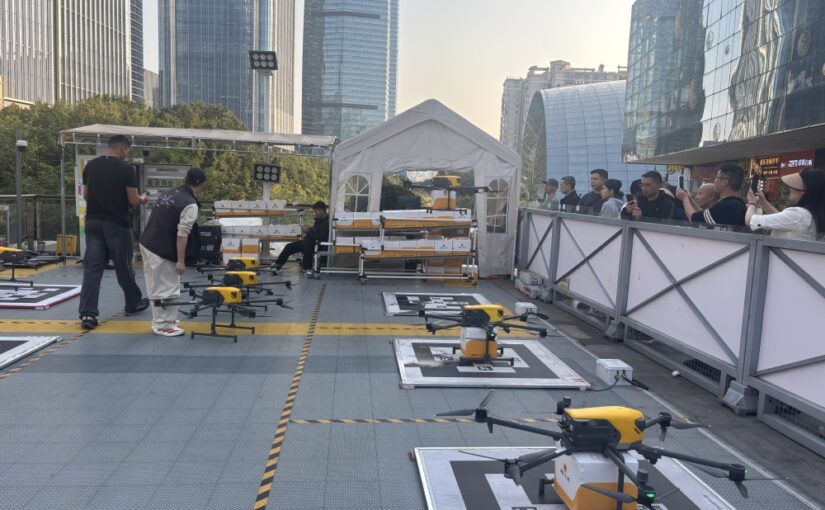
China’s drone exports are still growing structurally, but the pattern has become more complicated. Instead of a simple story of “more drones shipped every year,” the market is now shaped by three forces at the same time: China’s manufacturing dominance in civil UAVs, rising global demand for mapping, agriculture, inspection, logistics, and security applications, and tighter export controls on drones and sensitive drone components.
In short, China remains one of the world’s most important drone exporters, especially in consumer drones, industrial UAVs, agricultural drones, aerial imaging platforms, and drone components. However, the growth rate differs sharply by product type, destination market, and whether the products fall under export-control rules.
For commercial and industrial drones, China’s export capability is expanding because of its complete supply chain, strong battery ecosystem, camera and sensor integration, and cost advantage. For sensitive UAVs and components with potential military use, exports are becoming more regulated, with licensing requirements and destination-based restrictions playing a larger role.
This article answers five core questions:
- How fast are China’s drone exports growing?
- What are the latest trends in China’s drone exports?
- What is the export volume of Chinese drones?
- What is the export value of Chinese drones?
- Are China’s drone exports increasing or declining?
How Fast Are China’s Drone Exports Growing?
China’s drone exports are growing rapidly in long-term structural terms, although the short-term growth rate varies by category and market. The strongest growth is coming from industrial drones, agricultural drones, mapping UAVs, logistics drones, surveillance platforms, and drone components. At the same time, some sensitive drone exports have slowed because of export controls and geopolitical restrictions.
A practical answer is: China’s drone exports are growing strongly in value-added commercial and industrial segments, but some categories are facing slower shipment growth due to tighter export rules and market access restrictions.
China’s broader UAV industry has expanded quickly in recent years. According to China’s civil aviation data, the country’s registered UAV fleet reached nearly 3.29 million units by the end of 2025, representing a 51% year-on-year increase. While domestic registrations are not the same as exports, they show how fast China’s UAV manufacturing and application ecosystem is scaling. A larger domestic UAV ecosystem usually supports stronger export capacity because manufacturers benefit from scale, supplier density, testing environments, and cost reductions. ([en.ce.cn])
China’s low-altitude economy is also expanding. Reports from China’s Ministry of Industry and Information Technology research ecosystem indicated that the low-altitude economy reached about 505.95 billion yuan in 2023, with projections to exceed 1 trillion yuan by 2026. This includes drones, eVTOL aircraft, low-altitude logistics, infrastructure, services, and related technologies. The growth of this wider sector supports China’s drone export competitiveness because UAV manufacturers are integrated with batteries, motors, flight-control systems, AI software, imaging sensors, and communications equipment. ([china.org.cn])
However, the export growth rate is not uniform. Some market reports and trade-data platforms show continued overseas demand for Chinese drones, while news reports also point to declines in specific routes, especially exports to the United States after tighter controls and policy pressure. For example, reports in early 2025 said China’s exports of unmanned aerial vehicles to the United States fell sharply in November 2024 compared with November 2023. ([oreanda-news.com])
Therefore, the best interpretation is:
China’s drone exports are growing in overall capability and global reach, but the market is shifting from simple volume growth to selective, regulated, higher-value export growth.
The fastest-growing export opportunities are likely to be in:
- Agricultural drones
- Surveying and mapping UAVs
- Industrial inspection drones
- Emergency response and rescue drones
- Drone components and payload systems
- Autonomous drone docks and automated UAV systems
- Long-endurance fixed-wing VTOL drones
- Logistics and cargo drones
- Low-altitude economy solutions
- Customized OEM/ODM drone platforms
The slower or more restricted areas include:
- Long-range UAVs with sensitive payload capacity
- Drones with potential military use
- High-performance imaging and infrared payloads
- Certain flight-control systems
- Some drone components shipped to politically sensitive destinations
- Products affected by sanctions, blacklists, or national-security restrictions
What Are the Latest Trends in China’s Drone Exports?
The latest trends in China’s drone exports show a clear shift from consumer drones toward industrial, agricultural, professional, and controlled high-performance UAV systems. Exporters are increasingly focusing on value-added solutions rather than only selling aircraft hardware.
1. Industrial Drones Are Becoming More Important Than Consumer Drones
For many years, China was best known internationally for consumer camera drones. That segment remains important, but export growth is increasingly driven by industrial applications.
Examples include:
- Power line inspection
- Oil and gas pipeline inspection
- Mining survey
- Construction monitoring
- Forest patrol
- Border security
- Public safety
- Emergency response
- Agricultural spraying
- Crop monitoring
- Environmental monitoring
- Maritime surveillance
Industrial buyers usually care less about low retail price and more about reliability, endurance, payload compatibility, data quality, after-sales support, and integration with enterprise software. This allows Chinese drone exporters to move into higher-value market segments.
2. Agricultural Drones Are a Major Export Category
Agricultural drones are one of the strongest areas for Chinese manufacturers. China has a mature domestic agricultural drone market, especially for spraying, seeding, crop protection, and precision agriculture. This experience helps Chinese companies export agricultural UAVs to Southeast Asia, Latin America, Africa, the Middle East, and parts of Europe.
Common export products include:
- Crop spraying drones
- Spreading drones
- Heavy-lift agricultural UAVs
- Multispectral crop-monitoring drones
- Autonomous spraying platforms
- RTK-enabled precision agriculture drones
Agricultural drones are attractive for export because they solve a clear labor and productivity problem. In many countries, farm labor is expensive or scarce, while large agricultural areas require efficient crop management. Chinese drones often offer a strong price-performance ratio.
3. Fixed-Wing VTOL Drones Are Gaining Demand
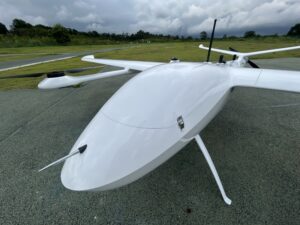
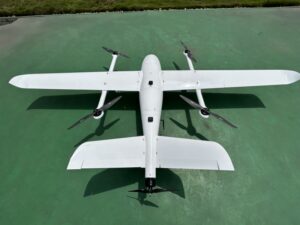
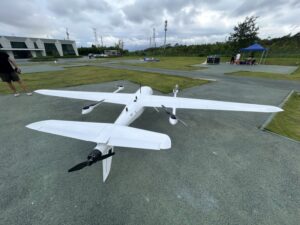
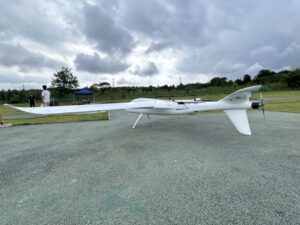
Fixed-wing VTOL drones are becoming more popular in export markets because they combine vertical takeoff and landing with long-range flight. Unlike multirotor drones, fixed-wing VTOL UAVs can cover larger areas while still operating without runways.
Typical use cases include:
- Aerial mapping
- Land surveying
- Pipeline inspection
- Border patrol
- Forest monitoring
- Mining site survey
- Coastal surveillance
- Disaster assessment
For B2B export websites, keywords such as “fixed wing VTOL drone,” “long range VTOL UAV,” “VTOL drone for mapping,” and “VTOL drone for surveying” are highly relevant because they match real procurement intent.
4. Export Controls Are Reshaping the Market
One of the most important trends is the expansion of China’s UAV export controls. In July 2024, China adjusted export controls for certain UAVs and drone-related items. These rules are intended to regulate drones and components that may have military or sensitive dual-use applications. ([english.www.gov.cn])
The South China Morning Post also reported that China expanded restrictions on drones and drone parts with potential military applications, involving agencies such as the Ministry of Commerce, China Customs, and the military equipment department. ([scmp.com])
This does not mean China has stopped exporting drones. Instead, it means exporters must pay more attention to:
- Product classification
- Technical parameters
- End-user information
- Destination country
- Export licenses
- Dual-use compliance
- Customs declarations
- Restricted-party screening
As a result, compliant commercial exports may continue to grow, while sensitive exports face more friction.
5. Drone Components Are Becoming Strategically Important
The drone export market is not only about complete UAVs. China is also a key supplier of drone components, including:
- Motors
- Propellers
- Batteries
- Flight controllers
- Gimbals
- Cameras
- Infrared sensors
- Communication modules
- ESCs
- Carbon-fiber frames
- Ground stations
- Payload systems
Several reports have noted that export controls and supply restrictions have affected prices of Chinese drone components, especially for foreign buyers. Some reports said prices for certain drone parts shipped from China rose sharply after tighter restrictions. ([agenzianova.com])
This shows that China’s role in the global drone supply chain is not limited to finished drone brands. Many international drone companies still depend on Chinese components, even when final assembly happens elsewhere.
6. Higher-Value Payloads Are Driving Export Value
Another trend is the rising importance of payloads. The drone itself is often only one part of the total system. In many industrial applications, the payload determines the value.
High-value payloads include:
- LiDAR sensors
- Thermal cameras
- Multispectral cameras
- Hyperspectral sensors
- EO/IR cameras
- Zoom cameras
- Gas detection modules
- Delivery boxes
- Loudspeakers
- Searchlights
- Mapping cameras
- Synthetic aperture radar systems
A basic drone may have a relatively low export value, but a drone equipped with LiDAR, RTK, thermal imaging, or AI inspection software can be worth many times more.
7. Global Buyers Are Asking for Complete Solutions
Overseas buyers increasingly want complete drone solutions rather than only aircraft.
A complete solution may include:
| Solution Component | Description |
|---|---|
| UAV platform | Multirotor, fixed-wing, VTOL, helicopter, or cargo drone |
| Payload | Camera, LiDAR, thermal sensor, agricultural tank, delivery box |
| Ground control station | Mission planning, route control, telemetry |
| Software | Mapping, inspection, AI recognition, fleet management |
| Training | Pilot training, maintenance training, safety procedures |
| Spare parts | Batteries, motors, propellers, landing gear, arms |
| Compliance documents | Manuals, certificates, export documents |
| After-sales service | Remote support, firmware updates, repair guidance |
This trend favors Chinese exporters that can provide customized industrial systems, OEM services, and engineering support.
8. Regional Demand Is Diversifying
Chinese drone exports are not dependent on one market. Demand is coming from:
- Southeast Asia
- Middle East
- Latin America
- Africa
- Europe
- Central Asia
- South Asia
The United States remains an important market for drone technology globally, but Chinese drone exports to the U.S. face significant political and regulatory pressure. In contrast, many emerging markets remain open to Chinese drones because they prioritize cost, availability, and practical performance.
9. Domestic Scale Supports Export Competitiveness
China’s domestic UAV ecosystem gives exporters a major advantage. A large domestic market allows companies to test products, reduce costs, improve reliability, and build supply chains before exporting.
By the end of 2025, China had nearly 3.29 million registered UAVs, showing the scale of domestic adoption. ([en.ce.cn])
This matters because export competitiveness is usually stronger when manufacturers already serve a large home market.
10. Low-Altitude Economy Policy Is Supporting Long-Term Growth
China’s low-altitude economy includes drones, eVTOL aircraft, unmanned logistics, aerial mobility, and related infrastructure. Policy support for this sector may indirectly support drone exports by encouraging innovation, testing, manufacturing scale, and ecosystem development.
The growth of China’s low-altitude economy is one reason international buyers should expect Chinese drone products to become more sophisticated, not less.
What Is the Export Volume of Chinese Drones?
The exact export volume of Chinese drones is difficult to summarize in one number because drones are exported under different customs codes, product categories, weights, technical specifications, and component classifications. Some trade databases count complete UAV shipments, while others include parts, toys, aircraft models, remote-controlled aircraft, or specialized unmanned aircraft.
A careful answer is:
China exports a large and globally significant volume of drones every year, but the publicly available export volume varies depending on whether the data counts consumer drones, industrial UAVs, agricultural drones, military UAVs, or components.
There are several reasons why the export volume is difficult to measure precisely.
1. Drones Are Classified Under Multiple Customs Codes
Drones may be declared under different HS codes depending on:
- Weight
- Use case
- Whether they are aircraft or toys
- Whether they are complete systems or parts
- Whether they are remotely controlled aircraft
- Whether they are civil or military products
- Whether they include cameras or sensors
This makes it difficult to produce a single universal export-volume figure.
2. Shipment Count Is Not the Same as Unit Count
Some trade-data platforms report shipments rather than units. One shipment may include one drone, dozens of drones, or hundreds of components. For example, a customs shipment may contain:
- 1 large industrial UAV
- 30 agricultural drones
- 500 drone motors
- 2,000 propellers
- 100 camera gimbals
- A full drone system with spare parts
Therefore, shipment data must be interpreted carefully.
3. Complete Drones and Drone Components Are Often Mixed
Many international buyers import drone components from China and assemble products locally. If only complete drones are counted, China’s real influence may be understated. If all components are counted as drone exports, the figure may be overstated.
4. Civilian and Military UAVs Are Different Markets
China exports both civilian UAVs and military UAV systems, but military UAV export data is less transparent. Civilian drone export data is more visible through customs and commercial trade platforms, while defense-related UAV exports may be reported through defense research, public contract announcements, or international security databases.
5. Export Controls Affect Reported Volumes
After China expanded UAV export controls, some sensitive categories may show lower volume, delayed shipments, or changes in product classification. This can make year-on-year comparisons more difficult.
Estimated Export Volume Pattern
Instead of relying on a single number, it is more useful to describe the export-volume pattern by category:
| Drone Export Category | Export Volume Pattern | Typical Buyers | Growth Outlook |
|---|---|---|---|
| Consumer camera drones | High unit volume | Retailers, distributors, creators | Stable to moderate growth |
| Agricultural drones | Medium to high volume | Farms, agribusinesses, distributors | Strong growth |
| Industrial inspection drones | Medium volume | Utilities, oil and gas, construction | Strong growth |
| Mapping and surveying drones | Medium volume | Survey companies, governments, engineering firms | Strong growth |
| Fixed-wing VTOL drones | Lower unit volume but higher value | Mapping, patrol, infrastructure inspection | Strong growth |
| Drone components | Very high volume | Manufacturers, repair companies, system integrators | Strong but more regulated |
| Military and dual-use UAVs | Lower public visibility | Government and defense buyers | Politically sensitive |
| Cargo and logistics drones | Emerging volume | Logistics firms, emergency services | Early-stage growth |
In short, China’s drone export volume remains large, but the most important change is that growth is moving toward professional and industrial segments rather than only consumer products.
What Is the Export Value of Chinese Drones?
The export value of Chinese drones is also difficult to define with one exact number because drones and drone parts are spread across multiple customs classifications. However, the available evidence suggests that China’s drone export value is significant and increasingly driven by higher-value industrial systems, payloads, and components.
A practical answer is:
The export value of Chinese drones is rising in higher-end segments, especially industrial UAVs, agricultural drones, VTOL platforms, payload-integrated systems, and drone components, even when export volume in some restricted categories slows.
Why Export Value Can Rise Even If Volume Slows
Drone export value can increase even when the number of exported units does not grow quickly. This happens when exporters sell more advanced systems.
For example:
| Product Type | Approximate Value Logic |
|---|---|
| Toy drone | Low unit value, high volume |
| Consumer camera drone | Moderate unit value, high volume |
| Agricultural spraying drone | Higher unit value, medium volume |
| Industrial inspection drone | Higher unit value, medium volume |
| Fixed-wing VTOL mapping drone | High unit value, lower volume |
| LiDAR-equipped UAV | Very high unit value, lower volume |
| EO/IR surveillance drone | Very high unit value, restricted export |
| Complete drone-in-a-box system | High system value |
| Drone fleet with software | High contract value |
This means that China’s drone export industry can grow in value by moving from low-cost hardware to integrated UAV systems.
Export Value Is Increasingly Linked to Payloads
A drone with only a standard camera may have limited export value. But a drone equipped with:
- RTK module
- LiDAR scanner
- Thermal camera
- Multispectral camera
- AI inspection software
- Long-range communication module
- Autonomous dock
- Spare battery system
- Ground station
can command a much higher price.
Therefore, export value growth is increasingly driven by systems integration.
Guangdong and Shenzhen Remain Important Export Hubs
China’s drone industry is heavily concentrated in southern China, especially Guangdong and Shenzhen. Shenzhen is known as a global center for drone innovation, electronics manufacturing, batteries, sensors, and UAV supply chains. Several market analyses identify Guangdong as a leading province in China’s UAV export value, reflecting its dense supplier network and brand concentration. ([sourceready.com])
Even when individual figures differ across sources, the direction is clear: the Pearl River Delta remains one of the world’s most important drone manufacturing and export clusters.
Export Controls Can Raise Prices
When export controls tighten, some components may become harder to obtain internationally. This can reduce volume but increase prices for available products. Reports in 2025 noted that Chinese drone-part prices for foreign buyers rose significantly as export restrictions affected supply. ([chinastrategy.org])
This is an important point for understanding export value. A decline in volume does not always mean a decline in value. If controlled or scarce products become more expensive, export value may remain stable or increase in certain categories.
Civilian Drone Export Value vs. Military Drone Export Value
Civilian drone export value is usually tied to commercial demand. Military UAV export value is tied to defense procurement, geopolitics, and government-to-government relationships. China has become a major exporter of military UAVs over the past decade, especially to countries seeking alternatives to Western systems. However, military UAV export values are not always transparent.
For SEO and business purposes, most companies should focus on the civilian and industrial drone export market, where the main value drivers are:
- Agriculture
- Mapping
- Surveying
- Inspection
- Logistics
- Emergency response
- Public safety
- Environmental monitoring
- Industrial automation
Are China’s Drone Exports Increasing or Declining?
China’s drone exports are generally increasing in long-term strategic importance, but not every category or destination is growing. Some exports are increasing, while others are declining or becoming more restricted.
The most accurate answer is:
China’s drone exports are increasing in industrial, agricultural, mapping, inspection, and component-related markets, but exports to certain destinations and sensitive categories are declining or slowing due to export controls, sanctions, and geopolitical pressure.
Where China’s Drone Exports Are Increasing
China’s drone exports are likely increasing in the following areas:
| Segment | Direction | Reason |
|---|---|---|
| Agricultural drones | Increasing | Demand for farm automation and crop spraying |
| Mapping drones | Increasing | Infrastructure, mining, land survey demand |
| Fixed-wing VTOL drones | Increasing | Long-range missions without runways |
| Industrial inspection drones | Increasing | Energy, construction, utilities, oil and gas |
| Emergency response drones | Increasing | Disaster monitoring and rescue operations |
| Drone components | Increasing structurally | Global manufacturers depend on Chinese supply |
| Autonomous drone docks | Increasing | Smart city, security, and inspection automation |
| Low-altitude economy solutions | Increasing | Policy support and new applications |
Where China’s Drone Exports May Be Declining
China’s drone exports may be declining or slowing in:
| Segment or Market | Direction | Reason |
|---|---|---|
| U.S.-bound complete drones | Declining or volatile | Security concerns, restrictions, political pressure |
| Sensitive long-range UAVs | More restricted | Export-control licensing |
| Certain infrared payloads | More restricted | Dual-use concerns |
| Military-use components | More restricted | Compliance and geopolitical risk |
| Unlicensed dual-use exports | Declining | Stronger customs enforcement |
| Products to sanctioned entities | Declining | Legal restrictions |
Reports have indicated that Chinese UAV exports to the United States dropped sharply in some periods, especially after increased restrictions. ([oreanda-news.com])
At the same time, China’s overall UAV ecosystem continues to expand, suggesting that the country’s export capacity remains strong even if certain routes are constrained.
The Difference Between Export Demand and Export Permission
One important point is that demand and permission are not the same.
International demand for Chinese drones may be high because Chinese products are cost-effective and technologically mature. But export permission depends on:
- Product specifications
- Destination country
- End user
- End use
- Payload type
- Range
- Weight
- Communication capability
- Autonomy level
- Military potential
This means some buyers may want Chinese drones, but exporters may not be able to ship them freely.
Overall Direction: Increasing but More Regulated
The best summary is:
- Commercial drone exports: generally increasing
- Industrial drone exports: increasing strongly
- Agricultural drone exports: increasing
- Drone component exports: still important but more controlled
- Sensitive UAV exports: more restricted
- Exports to the U.S.: more uncertain
- Exports to emerging markets: likely increasing
- Export value: likely shifting upward through higher-value systems
- Export volume: mixed depending on product category
China’s Drone Export Growth: Key Data and Indicators
Because exact customs data can vary depending on classification, the following table summarizes the most useful publicly visible indicators.
| Indicator | What It Shows | Latest Available Signal | Interpretation |
|---|---|---|---|
| Registered UAVs in China | Domestic UAV ecosystem scale | Nearly 3.29 million registered UAVs by end-2025, up 51% year on year ([en.ce.cn]) | Strong manufacturing and application base |
| Low-altitude economy value | Broader drone/eVTOL ecosystem | About 505.95 billion yuan in 2023, projected to exceed 1 trillion yuan by 2026 ([china.org.cn]) | Strong policy and industrial support |
| UAV export controls | Regulatory environment | China adjusted UAV export controls in July 2024 ([english.www.gov.cn]) | Sensitive exports face more licensing |
| Drone component prices | Supply-chain tightness | Reports show price increases after tighter controls ([agenzianova.com]) | Component exports remain strategically important |
| U.S.-bound drone exports | Geopolitical impact | Reports indicate sharp declines in some periods ([oreanda-news.com]) | Destination-specific decline |
| Industrial UAV demand | Export market direction | Mapping, inspection, agriculture, public safety demand expanding | Higher-value export opportunity |
| Fixed-wing VTOL demand | Professional UAV trend | Long-range mapping and inspection use cases growing | Strong B2B opportunity |
| Payload-integrated UAVs | Export value driver | LiDAR, thermal, multispectral, EO/IR systems increase unit value | Value growth may exceed volume growth |
Why China Dominates the Global Drone Supply Chain
China’s strength in drone exports comes from a unique combination of manufacturing depth, electronics supply chains, batteries, sensors, software, and domestic market scale.
1. Complete Electronics Supply Chain
Drone manufacturing requires many components:
- Motors
- ESCs
- Flight controllers
- GPS modules
- IMUs
- Cameras
- Gimbals
- Batteries
- Carbon-fiber frames
- Plastic injection parts
- Communication modules
- Ground-control systems
China has suppliers for nearly every part of the UAV value chain. This reduces production cost and speeds up product development.
2. Battery and Power-System Advantage
Drones depend heavily on batteries and power systems. China is a global leader in lithium batteries, battery management systems, and electric mobility supply chains. This benefits drone makers directly.
3. Shenzhen’s Innovation Ecosystem
Shenzhen is one of the world’s strongest hardware innovation clusters. Drone companies can quickly source parts, prototype products, test designs, and scale production.
4. Strong Domestic Demand
China’s domestic drone market is large. Applications include:
- Agriculture
- Police and emergency response
- Power grid inspection
- Logistics
- Mapping
- Urban management
- Environmental monitoring
- Firefighting
- Infrastructure inspection
Domestic demand helps companies improve reliability before exporting.
5. Price-Performance Advantage
Chinese drones often provide strong specifications at competitive prices. For many global buyers, especially in developing markets, this is a major reason to import from China.
6. OEM and ODM Flexibility
Many Chinese drone manufacturers offer:
- OEM branding
- ODM product development
- Custom payload integration
- Software customization
- Industrial design changes
- Mission-specific platforms
- Small-batch production
This is attractive for overseas distributors and system integrators.
Key Export Markets for Chinese Drones
Chinese drone exports serve a wide range of markets. While exact rankings vary by product category, the following regions are especially important.
Southeast Asia
Southeast Asia is a strong market for agricultural drones, mapping UAVs, and inspection drones. Countries with large agricultural sectors and infrastructure development needs are natural buyers.
Main applications:
- Rice field spraying
- Plantation monitoring
- Land survey
- Construction progress tracking
- Disaster response
- Coastal monitoring
Middle East
The Middle East is a major market for surveillance, infrastructure inspection, oil and gas monitoring, and emergency response drones.
Main applications:
- Pipeline inspection
- Border monitoring
- Desert patrol
- Smart city security
- Oilfield inspection
- Solar farm inspection
Latin America
Latin America has strong potential for agricultural drones and mapping UAVs.
Main applications:
- Soybean and corn farming
- Sugarcane management
- Mining survey
- Forest monitoring
- Infrastructure inspection
Africa
Africa is an emerging market for drone delivery, agricultural spraying, mapping, and public-service applications.
Main applications:
- Medical delivery
- Crop protection
- Land survey
- Wildlife monitoring
- Disaster response
- Infrastructure planning
Europe
Europe is a more regulated market but still offers opportunities for specialized industrial drones, components, and professional systems.
Main applications:
- Surveying
- Inspection
- Environmental monitoring
- Emergency response
- Precision agriculture
United States
The U.S. market is large but politically difficult for Chinese drone exporters. Concerns about data security, supply-chain dependence, and national security have increased restrictions and uncertainty. As a result, U.S.-bound exports are more volatile than exports to many other regions.
Product Categories Driving China’s Drone Export Value
Agricultural Spraying Drones
Agricultural drones are one of China’s most exportable UAV categories because they provide immediate productivity benefits.
Typical features:
- Large tank capacity
- Autonomous route planning
- RTK positioning
- Obstacle avoidance
- Terrain following
- High-flow spraying system
- Foldable frame
- Smart battery system
Mapping and Surveying Drones
Mapping UAVs are widely used in construction, mining, land management, and infrastructure planning.
Typical features:
- RTK/PPK positioning
- High-resolution camera
- Long flight time
- Stable flight control
- Photogrammetry compatibility
- Fixed-wing or VTOL design
Inspection Drones
Industrial inspection drones are used by power companies, oil and gas firms, railway operators, and construction companies.
Typical features:
- Thermal camera
- Zoom camera
- AI defect recognition
- Obstacle avoidance
- Long-distance video transmission
- Weather resistance
Fixed-Wing VTOL Drones
Fixed-wing VTOL drones are especially valuable for large-area missions. They are more expensive than basic multirotors but offer better range and endurance.
Typical features:
- Vertical takeoff and landing
- Long endurance
- Large coverage area
- Swappable payloads
- RTK/PPK support
- Autonomous mission planning
Drone-in-a-Box Systems
Drone docks are becoming more popular for automated inspections and security patrols.
Typical features:
- Automatic takeoff and landing
- Battery charging or swapping
- Weatherproof docking station
- Remote mission scheduling
- Cloud platform integration
- Automated data upload
Drone Components
Chinese drone components remain essential for the global UAV industry.
Common exports include:
- Motors
- ESCs
- Propellers
- Batteries
- Frames
- Flight controllers
- Cameras
- Gimbals
- Sensors
- Radio systems
Challenges Facing China’s Drone Exports
1. Export Controls
Export controls are now one of the biggest challenges. Companies must determine whether products require licenses and whether the buyer, destination, or end use creates compliance risk.
2. Geopolitical Restrictions
Some countries are reducing reliance on Chinese drones for government, defense, or critical infrastructure uses.
3. Data Security Concerns
Drones collect sensitive data, including images, maps, location data, and infrastructure information. This creates cybersecurity concerns in some markets.
4. Certification Requirements
Exporters may need to meet local requirements such as:
- CE
- FCC
- Remote ID
- aviation authority approval
- radio-frequency certification
- battery transport certification
- environmental standards
5. After-Sales Service
Industrial buyers require training, spare parts, maintenance, and technical support. Exporters that cannot provide reliable after-sales service may lose market share.
6. Competition from Local Manufacturers
Some countries are encouraging domestic drone manufacturing. However, many local manufacturers still depend on Chinese components.
7. Customs Classification Complexity
Incorrect HS codes or incomplete documentation can delay shipments or create compliance risk.
Outlook: What Will Happen to China’s Drone Exports Next?
China’s drone exports are likely to continue growing in commercial and industrial markets, but the growth will be more selective and compliance-driven.
Expected Growth Areas
The strongest future opportunities include:
- Agricultural drone exports
- Fixed-wing VTOL drones
- Industrial inspection drones
- Drone docks
- AI-powered UAV systems
- LiDAR mapping drones
- Emergency response drones
- Logistics drones
- Drone fleet-management software
- OEM and ODM drone platforms
Expected Pressure Areas
The most difficult areas include:
- Exports to the United States
- Drones with dual-use features
- High-end infrared payloads
- Long-range UAVs
- Military-sensitive components
- Products shipped to sanctioned regions or entities
Strategic Direction
The future of China’s drone export industry will not be only about selling more units. It will be about selling more advanced systems, building overseas service networks, passing local certifications, and managing export compliance.
Chinese drone exporters that succeed internationally will likely have:
- Strong compliance management
- Clear product classification
- Multiple market channels
- Local partners
- Spare-parts support
- Training programs
- Customization ability
- Reliable documentation
- Professional B2B marketing
- Strong industry-specific solutions
FAQ
How fast are China’s drone exports growing?
China’s drone exports are growing strongly in long-term structural terms, especially in industrial, agricultural, mapping, inspection, and drone-component markets. However, growth is uneven because some sensitive UAV categories and certain destination markets face stricter export controls and geopolitical restrictions.
What are the latest trends in China’s drone exports?
The latest trends include a shift from consumer drones to industrial drones, rising demand for agricultural UAVs, growth in fixed-wing VTOL drones, higher export value from LiDAR and thermal payloads, increased demand for complete drone solutions, and tighter export controls on sensitive drones and components.
What is the export volume of Chinese drones?
There is no single universally accepted public number for China’s drone export volume because drones are classified under different customs codes and may be counted as complete UAVs, toys, aircraft, components, or payload systems. Overall, China exports a large volume of drones and drone parts every year, with especially high volumes in consumer drones and components.
What is the export value of Chinese drones?
China’s drone export value is significant and increasingly driven by industrial UAVs, agricultural drones, fixed-wing VTOL drones, drone components, and high-value payload-integrated systems. Export value can rise even when unit volume slows because advanced UAV systems with LiDAR, thermal cameras, RTK, and autonomous docks command higher prices.
Are China’s drone exports increasing or declining?
China’s drone exports are generally increasing in industrial and commercial segments, but declining or becoming more volatile in certain sensitive categories and destination markets such as the United States. The overall trend is best described as increasing but more regulated.
Why are Chinese drones popular internationally?
Chinese drones are popular because they offer competitive prices, strong performance, mature supply chains, flexible OEM/ODM options, and a wide range of models for agriculture, mapping, inspection, security, logistics, and public safety.
Which Chinese drone export categories are growing fastest?
The fastest-growing categories include agricultural spraying drones, fixed-wing VTOL mapping drones, industrial inspection drones, drone docks, LiDAR drones, thermal imaging UAVs, and drone components.
How do export controls affect Chinese drone exports?
Export controls require exporters to check whether certain drones, components, sensors, or payloads need licenses. This can slow exports of sensitive products but does not stop ordinary commercial drone exports that meet compliance requirements.
Are Chinese drone components still important globally?
Yes. China remains a key supplier of drone motors, batteries, propellers, flight controllers, gimbals, cameras, sensors, frames, and other UAV parts. Many non-Chinese drone companies still rely on Chinese components.
Will China’s drone exports continue to grow?
Yes, China’s drone exports are likely to continue growing in many commercial and industrial markets. However, future growth will depend more on compliance, certification, after-sales service, product specialization, and destination-market strategy than on low-cost manufacturing alone.