No products in the cart.
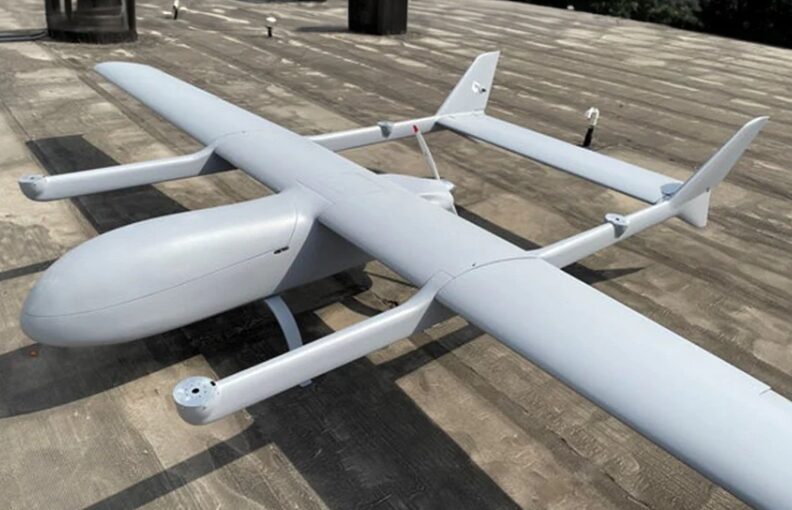
China is one of the world’s most important drone exporters, supplying a broad range of unmanned aerial vehicles, components, payloads, sensors, and related technologies to overseas markets. Chinese drones are used in agriculture, mapping, infrastructure inspection, emergency response, logistics, media production, public safety, and defense. At the same time, drones are increasingly treated as dual-use products because many civilian drone technologies can also be adapted for military, intelligence, surveillance, reconnaissance, or conflict-related purposes.
As a result, the current status of China’s drone exports cannot be understood only as a trade story. It is also a story about export control, national security, dual-use technology, end-user risk, and global geopolitical competition. China remains a major supplier of commercial drones, but the export environment has become more regulated, especially for higher-performance drones, certain drone components, and drones that may be used for military or harmful purposes.
This article answers four key questions:
- What is the current status of China’s drone exports?
- What are China’s drone export controls?
- Are drones subject to export restrictions in China?
- Is an export license required for drones from China?
The article also includes a summary table, a compliance-oriented analysis, and a FAQ section.
What is the current status of China’s drone exports?
China remains a leading global exporter of drones, especially commercial and industrial UAVs, but its drone exports are now shaped by stricter compliance requirements, dual-use concerns, and destination-specific risks. Chinese companies continue to supply drones to many overseas markets, but exporters and buyers must increasingly assess whether a drone, its components, its payload, or its intended use falls under export control rules.
China’s drone export position is built on several advantages: a strong electronics supply chain, large-scale manufacturing capacity, mature battery and sensor ecosystems, competitive pricing, fast product iteration, and the global reach of Chinese drone brands. In the commercial drone segment, Chinese manufacturers are especially influential in consumer photography drones, agricultural drones, surveying drones, inspection drones, and public-safety UAVs.
However, the export environment has changed. Drones are no longer viewed only as consumer electronics or industrial tools. The same drone platform that can be used for crop spraying or mapping may also be modified for battlefield reconnaissance, target identification, border monitoring, or delivery of payloads. This dual-use nature has made drones a sensitive export category.
China’s Export Control Law applies to the export of dual-use items, military products, nuclear items, and other goods, technologies, and services related to national security, national interests, and international obligations. The law defines export control as restrictive or prohibitive measures on the transfer of controlled items from China to overseas parties, and it also covers the provision of controlled items by Chinese citizens, legal persons, or organizations to foreign organizations or individuals. ([npc.gov.cn])
In practical terms, China’s drone exports today can be divided into several broad categories:
| Export Category | Examples | Export Status | Key Compliance Concern |
|---|---|---|---|
| Consumer drones | Camera drones, hobby drones, entry-level aerial photography drones | Generally exportable if not controlled and not intended for prohibited uses | End use, destination, sanctions risk, customs classification |
| Industrial drones | Agricultural drones, mapping drones, inspection drones, public-safety drones | Usually exportable, but some technical features may trigger controls | Payload capacity, range, autonomy, sensors, communication systems |
| Drone components | Flight controllers, navigation modules, communication links, engines, batteries, gimbals, sensors | May be exportable or controlled depending on specifications | Whether the component can support controlled UAV capability |
| High-performance UAVs | Long-range drones, high-endurance UAVs, autonomous systems | More likely to be controlled | Range, endurance, payload, military adaptability |
| Military UAVs | Armed drones, reconnaissance UAVs, combat UAVs | Highly regulated | Military export licensing, end user, end use, destination |
| Dual-use drone technology | Software, algorithms, autonomous navigation, swarm technology, infrared or thermal payloads | Potentially controlled | Technology transfer, intangible exports, foreign recipients |
The most important point is that not every drone exported from China requires a license, but some drones and drone-related technologies do. Even if a drone is not listed as a controlled item, it may still be restricted if the exporter knows or should know that it will be used for weapons proliferation, terrorism, military purposes, or other sensitive end uses.
China’s Ministry of Commerce announced adjustments to UAV export control measures in 2024. According to the Chinese government’s English-language summary, the adjustment prohibited the export of civilian drones not otherwise subject to export controls if they are intended for use in the proliferation of weapons of mass destruction, terrorist activities, or military purposes. ([english.www.gov.cn])
This means the current export status of Chinese drones is best described as follows: commercial exports remain active, but the compliance burden has increased. Exporters must pay attention not only to the product itself, but also to the buyer, end user, end use, destination country or region, and possible diversion risk.
China’s commercial drone exports remain strong
China’s commercial drone industry benefits from an integrated manufacturing ecosystem. Shenzhen and other technology hubs support rapid production of drone frames, cameras, motors, batteries, chips, flight-control systems, and software. Chinese drone companies often compete on price, product diversity, supply-chain efficiency, and scale.
The main commercial export applications include:
- Aerial photography and filmmaking
- Agriculture and crop spraying
- Mapping and surveying
- Mining and construction monitoring
- Powerline and pipeline inspection
- Disaster response and search-and-rescue
- Public safety and law enforcement
- Environmental monitoring
- Logistics and delivery pilot projects
For many international buyers, Chinese drones are attractive because they combine affordability with advanced features such as GPS navigation, obstacle avoidance, high-resolution cameras, automated flight planning, and long battery life.
China’s military and dual-use drone exports are more sensitive
China also has a defense UAV sector. Chinese military drones have attracted interest from countries seeking reconnaissance or armed drone capabilities. However, the military UAV export market is much more restricted than the commercial drone market. Military drones are subject to separate defense export approval processes, end-user review, and national security considerations.
Even commercial drones may become sensitive when exported in large quantities to unstable regions, conflict zones, military-linked buyers, or entities with unclear end use. This is why end-use review and due diligence are becoming central to drone export compliance.
The global environment affects Chinese drone exports
Chinese drone exports are also affected by international politics. Some countries have raised security concerns about Chinese drones, especially regarding data security, supply-chain dependence, and potential links between commercial technology and national security. The United States, for example, has imposed restrictions on certain Chinese drone companies and has debated or enacted measures affecting the procurement and use of Chinese drones by government agencies.
These foreign restrictions do not necessarily stop all Chinese drone exports, but they can reshape demand, encourage local alternatives, increase compliance costs, and make government-related customers more cautious.
What are China’s drone export controls?
China’s drone export controls are legal and administrative measures that restrict or prohibit the export of certain drones, drone components, drone technologies, and drone-related services when they may affect national security, military capability, weapons proliferation, terrorism, or other sensitive end uses.
China’s export control system is based on several layers:
- The Export Control Law of the People’s Republic of China
- Dual-use item export control regulations
- Controlled item lists
- Military product export controls
- Temporary or specific control announcements
- End-user and end-use review
- Customs enforcement and licensing administration
The Export Control Law provides the overarching legal framework. It covers dual-use items, military products, nuclear items, and other controlled goods, technologies, and services. It also requires attention to end users and end uses. For example, the law provides that the end user of a controlled item must undertake not to change the end use or transfer the item to a third party without approval from the state export control authorities. ([npc.gov.cn])
China’s broader export control policy emphasizes national security, non-proliferation, and legal administration. The Chinese government’s white paper on export controls describes China’s system as covering dual-use items, military products, nuclear materials, and other goods, technologies, and services related to safeguarding national security and national interests and fulfilling non-proliferation obligations. ([english.www.gov.cn])
Key features of China’s drone export control system
China’s drone export control system has several important features:
| Feature | Meaning for Drone Exports |
|---|---|
| Product-based control | Certain drones, parts, sensors, or technologies may be listed as controlled items |
| End-use control | Exports may be restricted if the drone will be used for military, terrorist, or WMD-related purposes |
| End-user control | Exports to certain entities, organizations, or individuals may be restricted |
| Destination risk | Exports to conflict zones or sanctioned destinations may receive closer scrutiny |
| Technology transfer control | Software, technical data, training, or support may also be controlled |
| Licensing requirement | Controlled exports usually require approval before shipment |
| Customs enforcement | Customs may inspect, detain, or block exports that lack required documents |
| Catch-all principle | Even unlisted items may be restricted if they are linked to sensitive end uses |
Dual-use control is central to drone regulation
Drones are a classic dual-use technology. A drone may be designed for agriculture, photography, mapping, or inspection, but the same platform may be used for surveillance, targeting, or military logistics. Components such as high-performance cameras, infrared sensors, navigation systems, communication modules, and autonomous flight software may also have dual-use characteristics.
China’s dual-use export controls are therefore highly relevant to drones. The regulations on dual-use export control are designed to implement the Export Control Law and strengthen control over items that have both civilian and military applications. A translation of China’s dual-use export control regulation describes its purpose as safeguarding national security and interests, performing international obligations such as non-proliferation, and regulating control of dual-use items. ([cset.georgetown.edu])
Drone controls can apply to complete drones and components
A common misunderstanding is that export control applies only to complete drones. In reality, drone export controls may also apply to parts and technologies, including:
- Flight-control systems
- Autopilot systems
- Navigation modules
- Satellite positioning modules
- Communication and data-link systems
- High-end cameras
- Infrared or thermal imaging equipment
- Radar systems
- Laser rangefinders
- Engines or propulsion systems
- Payload release mechanisms
- Ground control stations
- Encryption modules
- Autonomous flight software
- Swarm-control technology
- Technical manuals and training services
The exact control status depends on the technical specifications, the control list, the destination, the end user, and the end use.
China’s 2024 UAV export control adjustment
China adjusted UAV export control measures in 2024. The government summary stated that the adjustment was an update to measures that had been in place for a year and that it prohibited exports of civilian drones not otherwise subject to controls if they were intended for weapons of mass destruction proliferation, terrorist activities, or military purposes. ([english.www.gov.cn])
This is important because it shows that China’s drone export controls are not limited to listed high-performance drones. They also include a broader policy concern: preventing civilian drones from being used in prohibited military or security-sensitive ways.
The role of MOFCOM and Customs
China’s Ministry of Commerce, commonly referred to as MOFCOM, plays a key role in export control administration. Customs authorities also play an enforcement role at the border. Exporters may need to submit license documents or other materials before a controlled drone or controlled component can leave China.
In practice, an exporter may need to:
- Classify the drone or component.
- Check whether it appears on a controlled item list.
- Determine whether the destination, end user, or end use is sensitive.
- Apply for an export license if required.
- Prepare commercial, customs, and compliance documentation.
- Keep records for future inspection.
- Monitor whether the customer changes the end use or transfers the product.
Are drones subject to export restrictions in China?
Yes. Drones can be subject to export restrictions in China, especially when they meet controlled technical thresholds, contain sensitive components, have potential military applications, are exported to risky end users, or may be used for military, terrorist, or weapons-proliferation purposes.
However, this does not mean that all drones are banned from export. Many ordinary commercial drones can still be exported from China if they are not controlled items and are not intended for prohibited uses. The key issue is classification and risk assessment.
Not all drones are treated the same
China does not treat all drones identically. A small consumer photography drone is different from a long-endurance UAV with advanced navigation, encrypted communication, heavy payload capacity, or military-grade sensors.
The following factors may increase the chance that a drone is restricted:
| Risk Factor | Why It Matters |
|---|---|
| Long flight range | Longer range may increase military or surveillance utility |
| Long endurance | Long flight time can support reconnaissance or border monitoring |
| Heavy payload capacity | Larger payloads may allow military or harmful use |
| Autonomous navigation | Autonomy can support complex missions without constant human control |
| Advanced sensors | Thermal, infrared, radar, or high-zoom payloads can have military value |
| Encrypted communication | Secure data links may be sensitive |
| Anti-jamming capability | Resilience in contested environments increases military relevance |
| Swarm capability | Coordinated multi-drone operation is strategically sensitive |
| Military end user | Defense or security customers trigger higher scrutiny |
| Conflict-zone destination | Greater risk of battlefield use or diversion |
| Unclear buyer identity | Raises diversion and compliance concerns |
Export restrictions may be product-based or use-based
A drone may be restricted because of what it is, or because of how it will be used.
Product-based restrictions apply when a drone or component meets technical criteria in a control list.
Use-based restrictions apply when the exporter knows, should know, or is informed that the item may be used for prohibited purposes, even if the product is not normally controlled.
This use-based approach is especially important for drones because commercial drones can be repurposed quickly. A drone sold for “surveying” may later be used for battlefield reconnaissance if the buyer is not properly screened.
Civilian drones may still be restricted
Civilian classification does not automatically remove export control risk. A drone marketed as a civilian product may still be controlled if it has sensitive features or is intended for military or harmful use. China’s 2024 adjustment specifically addressed civilian drones that are not otherwise controlled but may be used for WMD proliferation, terrorism, or military purposes. ([english.www.gov.cn])
This means exporters should not rely only on product marketing labels such as “civilian,” “commercial,” or “industrial.” They should examine the actual technical specifications and transaction context.
Components and payloads may be more sensitive than the drone body
Sometimes the drone platform itself may be ordinary, but its payload or component may be sensitive. Examples include:
- Thermal imaging cameras
- Night-vision systems
- High-zoom optical cameras
- Laser rangefinders
- Radar payloads
- High-precision navigation units
- Anti-jamming modules
- Long-range communication links
- Payload release systems
- Autonomous targeting or tracking software
An exporter must therefore check not only the drone model, but also the accessories, software, firmware, sensors, and after-sales services included in the transaction.
Destination and end-user restrictions matter
Even if a drone is not controlled based on technical specifications, the destination and end user can create restrictions. A sale to a university, farm, film studio, or infrastructure company in a low-risk market may be relatively straightforward. A sale to an unknown intermediary near a conflict zone may require enhanced due diligence.
Red flags may include:
- The buyer refuses to identify the end user.
- The buyer requests unusual shipping routes.
- The buyer asks to remove product labels or documentation.
- The buyer wants large quantities inconsistent with its business profile.
- The buyer is newly established with no clear commercial history.
- The buyer is linked to military, intelligence, paramilitary, or sanctioned entities.
- The destination is close to an active conflict zone.
- The product specifications exceed what is needed for the stated civilian use.
Export restrictions are part of a broader global trend
China is not alone in tightening controls on drone-related exports. Many governments are reviewing drone supply chains because UAVs have become central to modern conflicts. The increasing military use of commercial drones has made export compliance more complicated worldwide.
For Chinese exporters, this means compliance must consider both Chinese export control rules and the import or sanctions rules of the destination country. For foreign buyers, it means that purchasing drones from China may require more documentation, especially for controlled models or sensitive applications.
Is an export license required for drones from China?
An export license is required for drones from China when the drone, component, technology, software, or service is classified as a controlled item, or when the transaction involves restricted end uses, restricted end users, or other conditions that trigger China’s export control rules. For ordinary non-controlled commercial drones with legitimate civilian end uses, an export license may not always be required.
The correct answer is therefore: sometimes yes, sometimes no. The need for a license depends on the product classification and transaction risk.
When is a drone export license likely required?
A license is more likely to be required when:
- The drone appears on a controlled export list.
- The drone meets technical thresholds for range, endurance, payload, autonomy, or other controlled features.
- A component or payload is controlled.
- The technology or software is controlled.
- The buyer is a military, defense, intelligence, or security-related end user.
- The end use is military, weapons-related, terrorist, or proliferation-related.
- The destination is sensitive or subject to special restrictions.
- The transaction involves a listed or restricted entity.
- The exporter is notified by authorities that a license is required.
- There is a risk of diversion to a prohibited end use.
When may a license not be required?
A license may not be required when:
- The drone is an ordinary commercial model.
- The drone does not meet controlled technical thresholds.
- The drone does not include controlled sensors, payloads, or software.
- The end user is a legitimate civilian customer.
- The end use is clearly civilian.
- The destination is not subject to relevant restrictions.
- No red flags indicate diversion or misuse.
- Customs classification and export documentation are consistent.
Even in these cases, exporters should keep records showing how they determined that no license was required.
Licensing analysis for drone exports
A practical licensing analysis should include the following steps:
| Step | Question | Why It Matters |
|---|---|---|
| 1. Product classification | What is the exact drone model and specification? | Determines whether the product is controlled |
| 2. Component review | Are any sensors, cameras, modules, or software controlled? | Components may trigger licensing even if the drone does not |
| 3. Technology review | Is technical data, source code, training, or support being exported? | Export control may apply to intangible transfers |
| 4. Destination screening | Where is the drone going? | Some destinations carry higher risk |
| 5. End-user screening | Who will ultimately use the drone? | Military or restricted users may require approval |
| 6. End-use review | What will the drone be used for? | Military, terrorist, or WMD-related uses are high-risk |
| 7. Intermediary review | Are brokers, freight forwarders, or resellers involved? | Intermediaries may hide the real end user |
| 8. License determination | Is a license required before shipment? | Avoids illegal export |
| 9. Documentation | Are records complete and consistent? | Supports customs clearance and future audits |
| 10. Post-shipment monitoring | Could the product be diverted? | Helps reduce re-export and misuse risk |
What documents may be needed?
Depending on the transaction, exporters may need some or all of the following:
- Commercial invoice
- Packing list
- Sales contract
- Technical specifications
- Product classification analysis
- Export control classification result
- End-user certificate
- End-use statement
- Import permit from destination country, if applicable
- Export license, if required
- Customs declaration documents
- Shipping documents
- Compliance screening records
- Internal approval records
- Distributor or reseller declarations
Why end-user certificates matter
For controlled drone exports, the end-user certificate is especially important. China’s Export Control Law addresses end-user and end-use commitments, including the principle that the end user should not change the end use or transfer the controlled item to a third party without approval. ([npc.gov.cn])
This matters because drones are portable and easy to resell. A drone shipped to a civilian reseller could be diverted to a military user or conflict zone if the exporter does not conduct proper due diligence.
What happens if a license is required but not obtained?
Exporting controlled drones without the required approval may lead to serious consequences, including:
- Customs detention or seizure
- Administrative penalties
- Fines
- Suspension of export privileges
- Blacklisting or compliance restrictions
- Criminal liability in serious cases
- Reputational damage
- Loss of foreign customers
- Contract disputes
- Increased future government scrutiny
Exporters should treat drone compliance as a core business function rather than an afterthought.
How do China’s drone export controls affect global buyers and exporters?
China’s drone export controls affect both Chinese exporters and international buyers. For exporters, the main impact is a higher compliance burden. For buyers, the main impact is the need to provide clearer documentation about end use, end user, and destination.
Foreign buyers may be asked to provide:
- Company registration information
- End-use declarations
- End-user certificates
- Project descriptions
- Import permits
- Government approvals
- Statements confirming no military or prohibited use
- Declarations against re-export without approval
For routine commercial purchases, this may be manageable. For high-performance drones, sensitive sensors, or bulk orders, the process may be more detailed and slower.
Impact on commercial buyers
Commercial buyers may face longer lead times if products require export classification or licensing review. Agriculture, infrastructure, surveying, and energy-sector customers should prepare complete documentation to show civilian use.
Impact on distributors and resellers
Distributors face higher risk because they may not be the final end user. They should maintain customer records, avoid suspicious transactions, and include contract clauses preventing unauthorized military use or re-export.
Impact on defense and government buyers
Defense, military, police, border-security, and intelligence-related buyers are likely to face closer scrutiny. Some transactions may require formal approval, and some may be denied depending on the destination and end use.
What is the future outlook for China’s drone exports?
China’s drone exports are likely to remain significant, but the market will become more regulated, segmented, and compliance-driven. The demand for drones is still growing globally, especially in agriculture, infrastructure, logistics, disaster response, and public safety. However, military use of commercial drones has changed how governments view UAV trade.
Several trends are likely:
-
More technical classification
Exporters will need more precise analysis of drone specifications, payloads, autonomy, range, and software.
-
Stronger end-use controls
Governments will focus less on product labels and more on how drones may actually be used.
-
More restrictions on high-performance components
Sensors, thermal cameras, communication links, navigation systems, and autonomous software may receive closer attention.
-
Greater scrutiny of re-export and diversion
Buyers may need to prove that drones will not be transferred to prohibited users.
-
More localization in foreign markets
Some countries may try to reduce dependence on Chinese drones for sensitive government uses.
-
Continued strength in commercial markets
Chinese drones will likely remain competitive in agriculture, mapping, inspection, and consumer applications because of price and supply-chain advantages.
-
More complex compliance for cross-border e-commerce
Online sales of drones and parts may face stricter customs and platform compliance requirements.
The future of China’s drone exports is therefore not simply “growth” or “decline.” It is more accurate to say that China will likely remain a major drone exporter, but the industry will operate under a more mature and restrictive export control environment.
Practical compliance checklist for drone exports from China
Exporters and buyers can use the following checklist as a starting point:
| Compliance Question | Yes/No | Action Needed |
|---|---|---|
| Is the exact drone model identified? | Collect model number and specifications | |
| Are all payloads and accessories listed? | Review cameras, sensors, communication systems | |
| Does the drone meet any controlled technical threshold? | Conduct export control classification | |
| Is any software or technology being transferred? | Review intangible export controls | |
| Is the buyer the final end user? | If not, identify the final end user | |
| Is the end use clearly civilian? | Obtain end-use statement | |
| Is the destination sensitive or high-risk? | Conduct enhanced due diligence | |
| Is the buyer linked to military or security agencies? | Consider license requirement | |
| Are there signs of diversion? | Escalate for legal review | |
| Is an export license required? | Apply before shipment if needed | |
| Are customs documents consistent? | Align invoice, HS code, description, and license | |
| Are records retained? | Keep compliance file for audits |
FAQ
What is the current status of China’s drone exports?
China remains one of the world’s leading drone exporters, especially in commercial and industrial UAVs. Chinese drones are widely used in agriculture, mapping, inspection, public safety, and aerial photography. However, exports are now more closely regulated because drones can be dual-use technologies.
What are China’s drone export controls?
China’s drone export controls are rules that restrict or prohibit exports of certain drones, components, technologies, and services. These controls are based on national security, non-proliferation, military-use concerns, terrorism prevention, and end-user risk.
Are drones subject to export restrictions in China?
Yes. Some drones are subject to export restrictions in China, especially high-performance drones, military UAVs, dual-use drones, sensitive components, and drones intended for military, terrorist, or weapons-proliferation purposes.
Is an export license required for drones from China?
An export license is required if the drone, component, technology, software, or transaction is controlled under China’s export control rules. Ordinary commercial drones for legitimate civilian use may not always require a license, but exporters should verify this before shipment.
Are all Chinese drones banned from export?
No. China does not ban all drone exports. Many commercial drones can still be exported legally. Restrictions mainly apply to controlled items, sensitive technologies, risky end users, prohibited end uses, and certain destinations.
Can civilian drones be controlled?
Yes. Civilian drones can be controlled if they meet technical thresholds or if they are intended for military, terrorist, or weapons-proliferation uses. A “civilian” label does not automatically remove export control risk.
What drone components may be controlled?
Potentially controlled components may include flight controllers, navigation systems, long-range communication links, thermal cameras, infrared sensors, radar payloads, anti-jamming modules, engines, payload systems, and autonomous flight software.
Who regulates drone exports in China?
China’s export control system involves national export control authorities, including the Ministry of Commerce, and Customs authorities for border enforcement. Military UAV exports may involve additional defense-related approval mechanisms.
What is an end-user certificate?
An end-user certificate is a document identifying the final user of the exported item and confirming the intended use. It helps authorities and exporters assess whether the drone may be diverted to prohibited military or sensitive uses.
What is an end-use statement?
An end-use statement explains how the drone will be used. For example, a buyer may state that drones will be used for crop monitoring, powerline inspection, mapping, or disaster response. The statement helps support the licensing and compliance review.
Can Chinese drones be exported to military users?
Possibly, but military end users create a much higher compliance burden. Military UAV exports or sales to defense-linked users may require licensing and may be restricted or prohibited depending on the destination and purpose.
Can drone technology be controlled even without exporting a physical drone?
Yes. Export controls can apply to technology, software, technical data, training, and services. Sharing controlled drone software or technical know-how with a foreign party may raise export control issues.
What are the risks of exporting drones without a license?
Risks include customs detention, fines, administrative penalties, loss of export privileges, criminal liability in serious cases, contract disputes, and reputational harm.
How can exporters determine whether a drone needs a license?
Exporters should classify the product, review technical specifications, check controlled item lists, screen the buyer and end user, assess the end use, evaluate destination risk, and consult legal or compliance professionals when needed.
How will China’s drone export market develop in the future?
China will likely remain a major drone exporter, but the market will become more compliance-driven. Commercial drone exports may continue to grow, while high-performance, dual-use, and military-related drone exports will face stricter review.
Conclusion
China’s drone exports remain globally important, but the export environment has become more complex. The country continues to supply a wide range of commercial, industrial, and specialized UAV products to international markets. At the same time, drones are increasingly treated as dual-use technologies because they can serve both civilian and military purposes.
The answer to whether drones are restricted or require licenses depends on the specific product, technical performance, components, software, end user, end use, and destination. Some ordinary commercial drones may be exported without a special license, while high-performance drones, sensitive components, military UAVs, and risky transactions may require approval or may be prohibited.
For exporters, the key is not simply to ask, “Is this a drone?” The better question is: What type of drone is it, what can it do, who will use it, where will it go, and for what purpose?
That is the core of modern drone export compliance in China.